 EN
EN
 AR
AR
 BG
BG
 HR
HR
 CS
CS
 DA
DA
 NL
NL
 FI
FI
 FR
FR
 DE
DE
 EL
EL
 HI
HI
 IT
IT
 JA
JA
 KO
KO
 PL
PL
 PT
PT
 RO
RO
 RU
RU
 ES
ES
 SV
SV
 TL
TL
 IW
IW
 LV
LV
 LT
LT
 SK
SK
 SL
SL
 UK
UK
 VI
VI
 ET
ET
 HU
HU
 MT
MT
 TH
TH
 TR
TR
 FA
FA
 MS
MS
 SW
SW
 GA
GA
 AZ
AZ

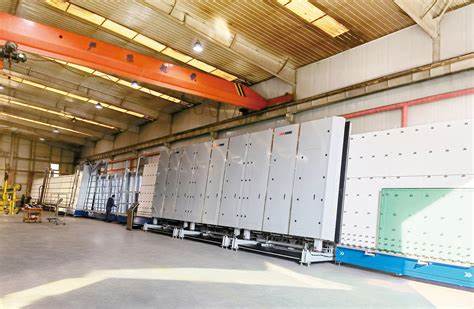
Smart factory operations demand precision, efficiency, and consistent quality across all manufacturing stages. insulating glass production represents a critical technology that transforms how glass manufacturers meet these demands in modern industrial environments. When integrated into a smart factory framework, insulating glass production systems deliver measurable improvements in output consistency, waste reduction, and energy efficiency that directly impact operational profitability.

The effectiveness of insulating glass production in smart factory environments stems from advanced automation, real-time monitoring, and seamless data integration. Modern IGU production lines eliminate manual intervention at critical checkpoints, reducing human error while maintaining strict thermal and dimensional specifications. This technological shift positions insulating glass equipment as a foundational asset for facilities transitioning to Industry 4.0 standards and seeking competitive advantage through operational excellence.
How Insulating Glass Production Enhances Smart Factory Efficiency
Automation and Quality Control Integration
Smart factory glass manufacturing relies on continuous process monitoring and automated adjustments that occur in real time. An insulating glass production line equipped with sensors and connected systems can detect deviations in seal integrity, gas fill pressures, and spacer dimensions instantly, triggering corrective actions before defects reach downstream stages. This closed-loop quality system reduces scrap rates by up to thirty percent compared to traditional batch-and-inspect methods, delivering substantial cost savings and improved throughput.
Insulating glass equipment in smart factories communicates with central data hubs, creating a transparent production record that satisfies compliance requirements and enables predictive maintenance scheduling. When an IGU production line operates within an integrated ecosystem, technicians receive alerts for component wear patterns before failures occur, preventing unplanned downtime and maintaining production velocity. This proactive approach transforms maintenance from a reactive burden into a strategic advantage.
Energy Efficiency and Thermal Performance
Insulating glass manufacturing processes consume significant energy during heating, curing, and environmental control stages. Smart factory optimization reduces energy intensity by coordinating equipment cycling with production demand forecasts, allowing thermal systems to operate at peak efficiency rather than idle or oversized modes. Facilities reporting on insulating glass production performance often note electricity savings between fifteen and twenty-five percent when transitioning to smart factory protocols.
The quality of insulating glass equipment directly influences the thermal properties of finished units. When IGU production lines maintain precise temperature and pressure environments, the resulting dual-pane or triple-pane units achieve superior insulating values, commanding premium market pricing. This relationship between manufacturing precision and product performance creates a financial incentive for smart factory operators to invest in advanced insulating glass production systems.
Operational Benefits and Market Competitiveness
Production Velocity and Throughput Gains
Traditional insulating glass manufacturing involves sequential, time-gated processes that create bottlenecks and idle inventory between stages. Smart factory integration of insulating glass production lines enables parallel processing and dynamic scheduling, where downstream operations begin as soon as previous stages complete rather than waiting for batch completion. Manufacturers report throughput increases of twenty to forty percent when modernizing to this model, translating directly to revenue growth without proportional capital reinvestment.
An IGU production line operating within a smart factory framework responds dynamically to market demand fluctuations. Orders are prioritized based on profitability metrics, customer urgency, and inventory levels, with insulating glass equipment automatically adjusting cycle times and production sequencing. This agility allows facilities to serve niche markets and custom specifications that traditional production methods cannot economically accommodate.
Data-Driven Decision Making
Insulating glass manufacturing generates vast quantities of operational data—temperature profiles, pressure curves, seal integrity measurements, and dimensional tolerances—yet traditional facilities often lack systems to capture and analyze this information. Smart factory implementations connect insulating glass production equipment to analytics platforms that reveal optimization opportunities invisible to human operators. Manufacturers using this data-driven approach identify material waste patterns, thermal efficiency gaps, and quality variance sources that improve performance incrementally but accumulate into substantial competitive advantages over time.
The business intelligence extracted from insulating glass equipment monitoring informs strategic decisions about capacity expansion, product mix optimization, and equipment replacement timing. Facilities with visibility into their IGU production line performance can allocate capital toward the highest-return investments and avoid costly missteps based on intuition rather than evidence.
Integration Challenges and Implementation Considerations
System Compatibility and Legacy Equipment
Existing facilities often face the challenge of integrating new insulating glass production systems with legacy equipment and established workflows. Smart factory glass manufacturing requires standardized communication protocols and data formats that older IGU production lines may not support natively. Manufacturers must evaluate whether retrofitting existing insulating glass equipment with monitoring sensors and connectivity modules offers sufficient return on investment, or whether replacement with modern systems better serves long-term strategic objectives.
The transition to smart factory operations demands more than equipment upgrades alone. Workforce training, process documentation updates, and organizational restructuring often prove as critical as technology installation. Facilities that underestimate these change management dimensions frequently fail to realize the full potential of their insulating glass production investments, achieving only partial efficiency gains while incurring unexpected implementation costs.
Skill Requirements and Operator Proficiency
Advanced insulating glass production equipment operated within a smart factory context requires technicians capable of interpreting data, troubleshooting complex systems, and collaborating with automation platforms. Traditional glass manufacturing skills—manual tuning, experience-based judgment, and hands-on equipment maintenance—remain valuable but insufficient for modern IGU production line management. Manufacturers must invest in ongoing training and recruit talent with hybrid skill sets combining traditional glass knowledge with digital literacy and analytical capability.
FAQ
Does insulating glass production equipment provide measurable ROI for smart factory operators?
Yes, insulating glass production systems in smart factories typically generate return on investment within three to five years through waste reduction, energy savings, increased throughput, and reduced downtime. An IGU production line operating with real-time quality monitoring and automated adjustments reduces scrap rates and improves first-pass yield, creating immediate financial impact. Combined with premium pricing for superior product quality and faster order fulfillment, the business case for modern insulating glass equipment is compelling for operators committed to continuous improvement.
How does an IGU production line contribute to product quality consistency?
Insulating glass manufacturing demands precise control of temperature, pressure, gas composition, and seal integrity—variables that fluctuate significantly with manual processes. An IGU production line equipped with sensors and automated feedback systems maintains these parameters within tight tolerances, ensuring every unit meets specifications consistently. This consistency translates to fewer customer complaints, lower warranty costs, and enhanced reputation for facilities operating advanced insulating glass equipment within smart factory frameworks.
What initial investments are required to implement smart factory insulating glass production?
Initial investments vary based on facility size, current equipment condition, and desired automation level, typically ranging from several hundred thousand to millions of dollars. Insulating glass production system costs include equipment purchase, installation, connectivity infrastructure, software licensing, and employee training. While substantial, these investments are generally offset by operational efficiencies within a reasonable timeframe, making them economically justified for manufacturers with sufficient production volume to amortize the capital outlay effectively.