 EN
EN
 AR
AR
 BG
BG
 HR
HR
 CS
CS
 DA
DA
 NL
NL
 FI
FI
 FR
FR
 DE
DE
 EL
EL
 HI
HI
 IT
IT
 JA
JA
 KO
KO
 PL
PL
 PT
PT
 RO
RO
 RU
RU
 ES
ES
 SV
SV
 TL
TL
 IW
IW
 LV
LV
 LT
LT
 SK
SK
 SL
SL
 UK
UK
 VI
VI
 ET
ET
 HU
HU
 MT
MT
 TH
TH
 TR
TR
 FA
FA
 MS
MS
 SW
SW
 GA
GA
 AZ
AZ


In commercial glass factories, precision is not optional—it is fundamental to profitability and customer satisfaction. A glass cutting line represents one of the most critical investments in modern glass manufacturing operations. This integrated glass cutting system automates the process of measuring, scoring, and breaking glass sheets to exact specifications, eliminating manual variability and reducing waste. The accuracy delivered by an automatic glass cutting line directly impacts yield rates, production speed, and the overall quality of finished products.
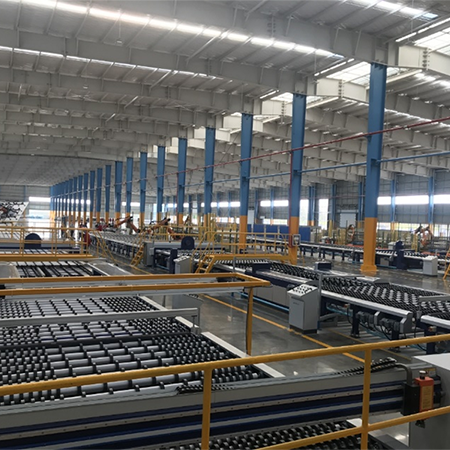
Understanding how a glass cutting line supports accurate cutting requires examining the mechanical and digital components that work in concert. Modern glass cutting equipment combines vision systems, precision actuators, and sophisticated software to transform raw glass sheets into precisely dimensioned products. This exploration covers the core mechanisms, operational advantages, and practical benefits that make this glass cutting machine indispensable in high-volume manufacturing environments.
How Precision Measurement and Automated Scoring Work
The foundation of accuracy in any glass cutting system begins with precision measurement. Advanced sensors and vision systems on the automatic glass cutting line scan incoming glass sheets to detect dimensions, thickness, and surface conditions. This data feeds directly into the control software, which calculates optimal cutting patterns and adjusts tool position in real time. Traditional manual glass cutting relies on operator skill and judgment, which introduces inherent variability; an automatic glass cutting line eliminates this human factor by executing cuts to tolerances of ±0.5 millimeters or better.
Automated Scoring and Breaking Processes
Once measurement data is processed, the glass cutting machine uses a hardened carbide or diamond scoring wheel to create a controlled fracture line on the glass surface. The pressure and speed of the scoring tool are calibrated precisely based on glass thickness and type, ensuring consistent stress concentration. Immediately following the score, a breaking mechanism applies controlled force perpendicular to the scored line, causing the glass to fracture cleanly along the intended path. This integrated glass cutting equipment approach ensures minimal chipping, edge irregularities, and material loss compared to manual or semi-automated methods. The repeatability of this process across thousands of cuts per day is what makes an automatic glass cutting line essential for commercial glass factories operating at scale.
Key Accuracy Features of Glass Cutting Equipment
Dimensioning Tolerance and Cut Consistency
A modern glass cutting system maintains dimensional accuracy through closed-loop feedback mechanisms. As the glass cutting line processes each sheet, laser or camera-based sensors verify that cuts match programmed specifications. If drift is detected—caused by tool wear, thermal expansion, or vibration—the control system adjusts tool position automatically. This real-time correction capability ensures that the last sheet cut in a production run matches the first sheet cut with near-identical precision. For commercial glass factories receiving orders requiring tight tolerances, such as architectural glazing or automotive glass, this consistency is non-negotiable and directly affects customer acceptance rates.
Edge Quality and Surface Integrity
The glass cutting equipment must produce edges that meet both dimensional and quality standards. A well-tuned automatic glass cutting line produces edges with minimal chipping and microcracking, critical for safety and aesthetic applications. The breaking force, timing, and tool geometry are optimized to create a fracture that propagates cleanly through the entire thickness. Some advanced glass cutting machines include polishing or edge-treatment stations as part of the integrated line, further enhancing the finished product quality. This comprehensive approach to edge management distinguishes high-performance glass cutting systems from basic cutting tools.
Operational Benefits and Production Efficiency
Waste Reduction and Yield Optimization
Precision cutting directly translates to reduced waste in commercial glass factories. When the glass cutting line cuts to exact specifications, there is less scrap material generated from oversized or undersized pieces. Advanced nesting software in the glass cutting system calculates optimal sheet layouts to minimize waste before cutting even begins. Over the course of a year, a commercial factory might reduce glass waste by 5 to 15 percent compared to manual cutting methods, representing substantial material cost savings. This waste reduction also addresses environmental concerns, as less glass ends up in landfills and more sellable product reaches customers.
Speed and Throughput Performance
The automatic glass cutting line operates at speeds that manual processes cannot match. A modern glass cutting machine can process hundreds of sheets per hour, with cycle times measured in seconds per cut. This throughput advantage allows commercial glass factories to meet tight delivery schedules and increase production volumes without proportionally increasing labor costs. The glass cutting equipment runs continuously, with minimal downtime for tool changes or recalibration, further boosting productivity. For factories competing on lead time and cost, the speed advantage of an automatic system is often the deciding factor in equipment investment decisions.
Integration and Control Systems in Glass Cutting Lines
Software and Process Optimization
Modern glass cutting equipment relies on sophisticated control software that orchestrates every aspect of the cutting process. The glass cutting system accepts production data—part dimensions, quantities, glass type, thickness—and automatically generates optimized cutting patterns. Operators input parameters once, and the automatic glass cutting line executes the same sequence flawlessly for thousands of repetitions. This software integration also enables data logging, quality tracking, and predictive maintenance, allowing factory managers to identify trends and optimize performance continuously. The combination of hardware precision and intelligent software is what separates a basic glass cutting machine from a strategic production asset.
Connectivity and Industry 4.0 Readiness
Contemporary glass cutting systems are designed to integrate with factory management and ERP systems. Network connectivity allows the glass cutting line to receive production schedules automatically and report real-time production metrics back to central systems. This connectivity enables planners to track output, detect anomalies, and make informed scheduling decisions. The glass cutting equipment becomes part of the broader smart factory ecosystem, contributing data that improves overall factory efficiency and decision-making.
FAQ
What cutting tolerances can a modern glass cutting line achieve?
A high-quality automatic glass cutting line typically maintains dimensional tolerances of ±0.5 millimeters for standard cutting operations, with precision models reaching ±0.25 millimeters under optimal conditions. The actual tolerance depends on glass thickness, edge condition, and the specific glass cutting machine model. Factory engineers should verify tolerance capabilities against specific application requirements before installation, as some specialty applications may demand even tighter control than standard equipment can provide.
How does a glass cutting line reduce production cost in commercial factories?
Cost reduction occurs through multiple channels: reduced waste material through precision cutting, lower labor requirements due to automation, fewer quality defects that trigger rework or customer rejections, and higher throughput per floor-space unit. A glass cutting system also reduces tool wear caused by improper manual scoring, extending consumable life and lowering replacement costs. Over three to five years, these cumulative savings typically justify the initial capital investment in an automatic glass cutting line.
Can a glass cutting machine handle different glass types and thicknesses?
Modern glass cutting equipment is designed to accommodate a range of glass types—float glass, tempered, laminated—and thicknesses from 2 millimeters to 19 millimeters or more. The glass cutting line operator selects the appropriate tool, pressure settings, and breaking force through the control software, adapting the system to each material quickly. However, switching between very different material types may require tool changes and re-calibration, so the highest efficiency occurs when processing runs are grouped by glass type. This flexibility makes an automatic glass cutting line valuable for factories producing diverse products.