 EN
EN
 AR
AR
 BG
BG
 HR
HR
 CS
CS
 DA
DA
 NL
NL
 FI
FI
 FR
FR
 DE
DE
 EL
EL
 HI
HI
 IT
IT
 JA
JA
 KO
KO
 PL
PL
 PT
PT
 RO
RO
 RU
RU
 ES
ES
 SV
SV
 TL
TL
 IW
IW
 LV
LV
 LT
LT
 SK
SK
 SL
SL
 UK
UK
 VI
VI
 ET
ET
 HU
HU
 MT
MT
 TH
TH
 TR
TR
 FA
FA
 MS
MS
 SW
SW
 GA
GA
 AZ
AZ


High-volume glass manufacturing operations face significant challenges in maintaining consistent quality, reducing waste, and meeting production targets. A glass sorting system addresses these pressures by automating the inspection and classification of glass products at industrial scale. The question many manufacturers ask is whether implementing such technology truly delivers value within their existing workflows and budget constraints. Understanding the compatibility of a glass sorting system with high-volume operations requires examining both the operational requirements and the technological capabilities that modern sorting solutions offer.
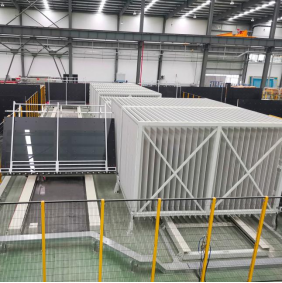
The suitability of a glass sorting system for high-volume production hinges on three critical factors: throughput capacity, integration compatibility, and return on investment. Automatic glass sorting has revolutionized how manufacturers handle volume, eliminating manual inspection bottlenecks and delivering consistent defect detection. High-volume operations specifically benefit from glass sorting equipment that processes thousands of items per hour while maintaining accuracy standards that would be impossible through human labor alone. This article explores whether a glass sorting system is the right fit for your manufacturing environment.
Understanding Glass Sorting Equipment Capabilities
Throughput and Speed Performance
Modern glass sorting equipment is engineered to handle the demands of high-volume manufacturing operations. A typical glass sorting machine can process between 1,000 and 15,000 items per hour, depending on product type, container size, and sorting complexity. This throughput capacity directly aligns with the needs of large-scale glass manufacturers who measure daily production in millions of units. The speed of automatic glass sorting means that bottlenecks traditionally caused by manual inspection are eliminated entirely, allowing production lines to run continuously without quality checkpoint delays.
The glass inspection sorting system performs its work in milliseconds, using advanced optical sensors and artificial intelligence to identify defects, contamination, color inconsistencies, and dimensional variations. For high-volume operations, this speed translates into uninterrupted production flow and the ability to scale output without proportionally increasing inspection labor costs. Glass sorting equipment also reduces the variability that comes from fatigue-related human error, ensuring that every 10,000th unit is inspected with the same precision as the first unit.
Detection Accuracy and Defect Classification
High-volume manufacturing operations require near-perfect defect detection rates to protect brand reputation and meet customer specifications. Glass sorting systems achieve detection accuracies exceeding 99.5%, identifying surface scratches, chips, cracks, color deviations, and foreign material contamination. The glass sorting machine learns from production data, continuously refining its classification algorithms to adapt to material variations and evolving product specifications. This adaptive capability ensures that a glass sorting system remains effective even as production parameters shift.
The glass inspection sorting system classifies defects into severity categories, allowing manufacturers to segregate cosmetic blemishes from structural failures. High-volume operations benefit from this granular sorting because it enables different disposition paths—some products may be reworked, downgraded, or recycled based on defect type. Automatic glass sorting provides detailed sorting data that feeds directly into quality control dashboards, giving plant managers real-time visibility into defect trends and production quality metrics.
Integration with High-Volume Production Lines
Compatibility with Existing Manufacturing Systems
A glass sorting system must fit seamlessly into existing production infrastructure for high-volume operations to realize immediate benefits. Modern glass sorting equipment integrates with conveyors, drop mechanisms, and downstream packaging systems through standard industrial interfaces. The glass sorting machine can be retrofitted into existing lines without requiring complete production redesign, which is critical for manufacturers who cannot afford extended downtime. Integration timelines typically range from two to eight weeks depending on the complexity of the installation and the manufacturing environment.
High-volume manufacturers must also consider data connectivity and software integration. A glass inspection sorting system communicates with existing MES (Manufacturing Execution Systems) and ERP platforms, feeding sorting results into quality databases and production reports. This interoperability ensures that glass sorting equipment becomes part of the broader digital manufacturing infrastructure rather than an isolated machine. Automatic glass sorting data flows into predictive maintenance systems, allowing plant teams to anticipate equipment service needs before failures occur.
Space and Infrastructure Requirements
High-volume operations often operate in facilities with space constraints, making compact equipment design essential. A glass sorting machine occupies a footprint of approximately 2 to 4 square meters, depending on the model and configuration. Glass sorting equipment typically mounts directly onto existing production lines using adjustable frames and mounting hardware that accommodates various line heights and configurations. This modular design means that a glass inspection sorting system can be deployed with minimal facility modifications.
Power consumption is another infrastructure consideration for high-volume operations. Modern glass sorting systems require between 5 and 15 kilowatts depending on size and complexity, which is manageable for most industrial facilities. Compressed air requirements for pneumatic ejection systems are typically 6 to 8 bars at moderate volume, again falling within standard industrial utility provisions. High-volume manufacturers find that infrastructure adaptation is rarely a barrier to implementing automatic glass sorting technology.
Financial and Operational Return on Investment
Cost Savings and Quality Improvements
The business case for deploying a glass sorting system in high-volume operations relies on calculating tangible cost savings across multiple dimensions. Automatic glass sorting eliminates the need for 2 to 4 full-time quality inspectors per shift, representing annual labor savings between $80,000 and $200,000 depending on regional wages and benefits. Beyond direct labor reduction, glass sorting equipment reduces warranty claims by catching defects before products reach customers, which protects brand reputation and customer retention. The glass inspection sorting system also minimizes scrap by allowing precise segregation of reworkable versus non-recoverable products.
Defect reduction through glass sorting machine deployment typically decreases customer-reported issues by 60 to 85 percent. High-volume manufacturers experience improved yield rates, reduced rework costs, and enhanced production consistency. The financial impact extends to supply chain reliability—consistently higher-quality products reduce customer disputes, returns, and logistics costs associated with failed shipments. Glass sorting equipment investments typically achieve payback periods between 18 and 36 months in high-volume production environments, with ongoing cost reductions continuing indefinitely after payback.
Scalability and Long-Term Value
High-volume operations often anticipate future production growth, making scalability a critical evaluation criterion for equipment investment. A glass sorting system scales efficiently because the per-unit cost of sorting decreases as throughput increases. Automatic glass sorting maintains consistent defect detection rates across output levels, whether running at 50 percent or 100 percent line capacity. Multiple glass sorting machines can be networked together to handle parallel production lines, creating flexible capacity that grows with business demands.
The long-term value proposition strengthens as glass sorting technology matures and market adoption increases. Service availability improves, spare parts become readily accessible, and operating knowledge deepens across the industry. Glass inspection sorting systems deployed today will likely see software enhancements and capability improvements throughout their operational life, extending value creation beyond initial implementation. High-volume manufacturers who invest in glass sorting equipment position themselves to benefit from both immediate operational improvements and long-term technological advancement.
FAQ
What is the typical processing speed of a glass sorting machine for high-volume operations?
A glass sorting machine typically processes between 1,000 and 15,000 items per hour depending on product specifications and sorting complexity. For high-volume operations, this throughput capacity ensures that production lines remain continuous without inspection bottlenecks. Speed varies based on container size, shape complexity, and the number of sorting categories required, but modern glass sorting equipment maintains consistent performance across extended production runs.
How does automatic glass sorting improve quality control in manufacturing?
Automatic glass sorting uses advanced optical sensors and artificial intelligence to detect defects with accuracy exceeding 99.5 percent, identifying surface flaws, color variations, and contamination that manual inspection might miss. Glass sorting equipment classifies defects into severity categories, enabling precise disposition decisions for each product. The glass inspection sorting system provides continuous data collection, allowing manufacturers to track quality trends and identify root causes of defects in real time.
What is the typical return on investment timeline for implementing a glass sorting system?
High-volume manufacturers typically achieve return on investment between 18 and 36 months through labor savings, scrap reduction, and decreased warranty claims. Glass sorting equipment eliminates the need for multiple quality inspectors while reducing customer-reported defects by 60 to 85 percent. The exact payback timeline depends on production volume, current defect rates, and regional labor costs, but the financial benefits continue indefinitely after the initial investment is recovered.