 EN
EN
 AR
AR
 BG
BG
 HR
HR
 CS
CS
 DA
DA
 NL
NL
 FI
FI
 FR
FR
 DE
DE
 EL
EL
 HI
HI
 IT
IT
 JA
JA
 KO
KO
 PL
PL
 PT
PT
 RO
RO
 RU
RU
 ES
ES
 SV
SV
 TL
TL
 IW
IW
 LV
LV
 LT
LT
 SK
SK
 SL
SL
 UK
UK
 VI
VI
 ET
ET
 HU
HU
 MT
MT
 TH
TH
 TR
TR
 FA
FA
 MS
MS
 SW
SW
 GA
GA
 AZ
AZ


Modern industrial glass manufacturing faces mounting pressure to increase production capacity, reduce operational costs, and maintain stringent quality standards simultaneously. The adoption of an automatic glass storage warehouse has emerged as a transformative solution that directly addresses these challenges by revolutionizing how manufacturers handle, store, and retrieve delicate glass materials. This technology represents a fundamental shift from traditional manual warehouse operations to intelligent, precision-driven systems that safeguard product integrity while dramatically accelerating workflow efficiency.
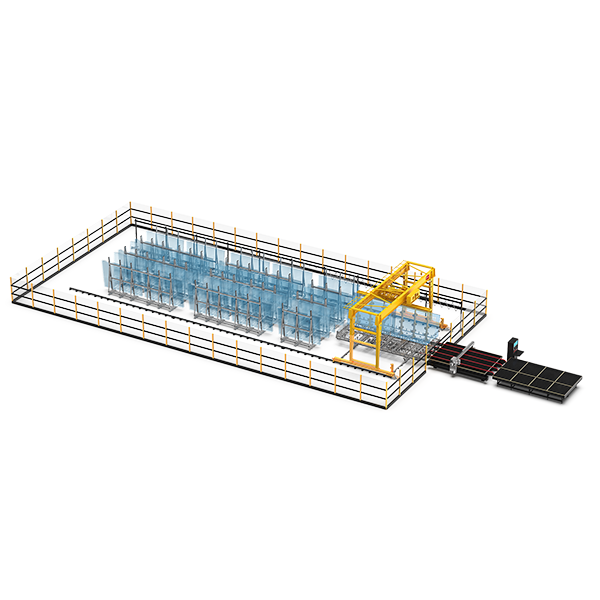
The implementation of glass warehouse automation delivers measurable benefits that extend far beyond simple space optimization. By integrating an automated glass storage system into manufacturing operations, companies achieve superior material handling precision, minimize product damage, and create safer working environments for their workforce. This comprehensive transformation allows modern glass producers to compete effectively in increasingly demanding markets while maintaining the operational flexibility required for custom orders and rapid production adjustments.
Operational Efficiency and Production Throughput
Accelerating Material Movement
Traditional glass warehouse management relies on manual labor and forklift operations, which inherently introduce variability and delay into production schedules. An automated glass storage system eliminates these bottlenecks by providing instant retrieval and deployment of materials exactly when production lines require them. The system operates continuously without fatigue or time-related performance degradation, ensuring that production teams never experience unnecessary waiting periods. Advanced inventory tracking integrated into glass warehouse automation provides real-time visibility into material location, quantity, and specifications, enabling production planners to optimize scheduling with unprecedented precision and responsiveness.
Maximizing Space Utilization
Dense vertical storage capability distinguishes modern automated glass storage from conventional warehouse configurations. By utilizing vertical space efficiently, manufacturers can store significantly more material within the same footprint, freeing valuable floor area for additional production equipment or expanded manufacturing capacity. This spatial optimization becomes particularly valuable for facilities constrained by real estate limitations or those pursuing aggressive expansion strategies. Glass warehouse automation enables three-dimensional inventory management that would be practically impossible to achieve manually, delivering substantial cost advantages through reduced facility requirements.
Quality Preservation and Damage Reduction
Precision Handling for Fragile Materials
Glass sheets and panels demand extraordinarily careful handling to prevent damage that compromises both structural integrity and aesthetic quality. Manual handling inevitably introduces human error, inconsistent technique, and accidents that result in breakage, scratches, and surface contamination. An automatic glass storage warehouse employs specialized mechanical systems engineered specifically for glass characteristics, including controlled acceleration, vibration isolation, and protective contact surfaces that preserve material condition throughout every cycle. The glass storage system eliminates the physical variability inherent in human handling, ensuring consistent, damage-free material movement that reduces waste and maximizes usable output from every production batch.
Environmental Control and Material Protection
Advanced glass warehouse automation systems incorporate environmental monitoring and control features that maintain optimal conditions for glass storage. Temperature and humidity regulation prevent thermal stress and condensation that could degrade adhesive layers or coatings applied to glass surfaces. Dust containment features protect stored materials from contamination that might compromise final product quality or require additional cleaning operations. The sealed environment created by automated glass storage protects materials from airborne particles, chemical exposure, and weather fluctuations that could necessitate expensive remediation or complete batch rejection.
Safety Enhancement and Risk Mitigation
Eliminating Manual Handling Injuries
Occupational injuries associated with manual glass material handling represent significant ongoing costs through worker compensation claims, lost productivity, and regulatory compliance burdens. Glass warehouse automation removes workers from hazardous material handling situations, substantially reducing the frequency and severity of workplace injuries. The automatic glass storage warehouse eliminates crushing hazards, strain injuries, and impact trauma inherent in manual glass sheet movement and stacking operations. By prioritizing worker safety through technological innovation, manufacturers demonstrate commitment to employee wellbeing while simultaneously reducing insurance premiums, recruitment costs, and management overhead associated with injury investigations and prevention protocols.
Regulatory Compliance and Operational Safety
Occupational safety regulations in industrial environments increasingly mandate comprehensive hazard elimination and incident prevention measures. An automated glass storage system maintains compliance with evolving safety standards while creating objective documentation of material handling practices through system logs and performance metrics. Glass warehouse automation reduces exposure to chemical solvents and protective coatings applied during manufacturing, improving overall facility safety profiles. The consistent, controlled operation of automated systems eliminates the unpredictable behavioral factors that complicate manual operation assessment and regulatory verification.
Economic Impact and Return on Investment
Labor Cost Optimization
Deployment of glass warehouse automation reduces direct labor requirements for material handling, storage management, and inventory control operations. The freed labor capacity can be redirected toward higher-value activities including quality inspection, process optimization, equipment maintenance, and product development initiatives. While automatic glass storage warehouse systems require capital investment, the operational labor savings accumulate rapidly over multi-year deployment horizons, delivering substantial return on investment alongside improved production capability. The glass storage system enables smaller workforce teams to manage substantially larger material volumes, effectively increasing per-employee productivity metrics and competitive positioning.
Inventory Management and Working Capital Efficiency
Real-time inventory visibility provided by glass warehouse automation enables precise demand forecasting and optimized material procurement strategies. Reduced storage space requirements lower carrying costs for expensive specialty glass materials while minimizing inventory obsolescence risk. The automated glass storage system prevents material loss from damage and contamination, recovering margins that would otherwise be compromised by waste. Advanced inventory control features integrated into glass warehouse automation support just-in-time manufacturing approaches that reduce working capital requirements and accelerate cash conversion cycles.
FAQ
What specific types of glass materials can be stored in an automatic glass storage warehouse?
Modern glass warehouse automation systems accommodate diverse glass specifications including clear, tinted, tempered, coated, and laminated sheets in various sizes and thicknesses. Specialized handling fixtures accommodate different glass weights and dimensional profiles, from small specialty pieces to oversized architectural panels. The automated glass storage system can be configured with custom adapters and positioning mechanisms tailored to specific material characteristics and production requirements. Manufacturers should work with equipment specialists to verify that their particular glass types and specifications are compatible with planned automation deployment.
How does glass warehouse automation integrate with existing manufacturing equipment and systems?
Integration of an automatic glass storage warehouse typically involves connecting the storage system to existing production scheduling software, inventory management systems, and material handling equipment through standardized communication protocols. The glass storage system can operate autonomously or receive coordinated instructions from centralized manufacturing execution systems that optimize material flow across the entire production facility. API connections and data bridges enable seamless information exchange between the automated glass storage and upstream planning systems, creating cohesive operational environments. Integration complexity varies based on existing facility architecture, legacy system capabilities, and specific production workflow requirements.
What maintenance requirements should manufacturers anticipate for glass warehouse automation systems?
Preventive maintenance for an automatic glass storage warehouse includes routine mechanical inspection, lubrication of moving components, and calibration of positioning sensors to maintain system accuracy and reliability. Specialized training programs ensure that maintenance technicians understand glass handling equipment requirements and can perform repairs without introducing damage risk. The glass storage system typically includes diagnostic capabilities that identify wear patterns and maintenance needs before component failures occur, enabling proactive scheduling that minimizes production disruptions. Manufacturers should establish relationships with equipment service providers and maintain adequate spare parts inventory to support rapid response to any operational issues.