 EN
EN
 AR
AR
 BG
BG
 HR
HR
 CS
CS
 DA
DA
 NL
NL
 FI
FI
 FR
FR
 DE
DE
 EL
EL
 HI
HI
 IT
IT
 JA
JA
 KO
KO
 PL
PL
 PT
PT
 RO
RO
 RU
RU
 ES
ES
 SV
SV
 TL
TL
 IW
IW
 LV
LV
 LT
LT
 SK
SK
 SL
SL
 UK
UK
 VI
VI
 ET
ET
 HU
HU
 MT
MT
 TH
TH
 TR
TR
 FA
FA
 MS
MS
 SW
SW
 GA
GA
 AZ
AZ


Grinding machines play a critical role in the production of laminated and insulating glass products. These specialized machines ensure precision edge finishing, surface smoothness, and dimensional accuracy that are essential for safety, durability, and proper installation. Without proper grinding machines and glass grinding equipment, manufacturers face challenges in meeting quality standards, reducing waste, and maintaining competitive production timelines in this demanding industry.
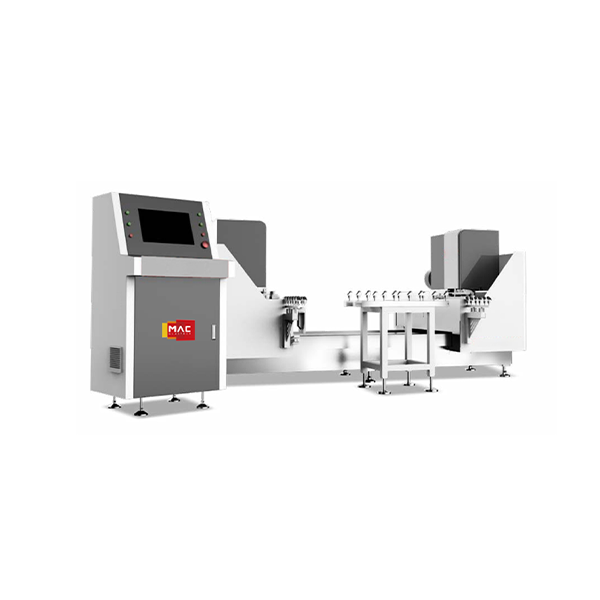
The laminated and insulating glass manufacturing sector demands precision at every stage of production. A glass grinding machine must deliver consistent results while minimizing chipping, edge defects, and material loss. Automatic glass grinder systems have revolutionized the industry by enabling manufacturers to scale production while maintaining strict quality control. This article explores why grinding machines are indispensable in these specialized glass applications and how they drive operational efficiency.
Edge Quality and Safety Compliance
The Importance of Precision Edge Finishing
Laminated glass and insulating glass products must meet rigorous safety and performance standards. Sharp or rough edges on these glass products create safety hazards during handling, installation, and use. A glass edge grinding machine removes burrs, chips, and irregularities created during cutting, ensuring edges meet international safety standards such as ASTM C1036 and EN 1863. This precision prevents injury during manufacturing, transportation, and end-user installation.
Proper edge preparation also extends product lifespan. Micro-cracks and stress concentrations at rough edges initiate failure under thermal or mechanical stress. Automatic glass grinder systems create smooth, polished edges that distribute stress evenly, reducing premature breakage in insulating glass units and laminated glass assemblies. This quality advantage directly translates to reduced warranty claims and improved customer satisfaction.
Dimensional Accuracy and Tolerance Control
Modern glass grinding equipment ensures consistent dimensionality within tight tolerances. Laminated and insulating glass components must fit precisely into framing systems and sealing assemblies. Deviation from specifications leads to installation problems, moisture infiltration, and unit failure. A glass grinding machine maintains uniform edge width, thickness, and flatness across all processed units. Automatic glass grinder technology enables manufacturers to achieve repeatable tolerances that manual processes cannot match, critical for high-volume production environments.
Production Efficiency and Cost Reduction
Increased Throughput and Labor Optimization
Automatic glass grinder systems dramatically accelerate production cycles compared to manual edge finishing. A single glass grinding machine operator can oversee multiple units simultaneously, improving labor productivity and reducing per-unit labor costs. Advanced glass edge grinding machine models include automated loading, grinding, and unloading sequences that minimize downtime between cycles. For manufacturers processing thousands of glass panels monthly, this efficiency gain translates to substantial cost savings and improved market responsiveness.
Labor optimization extends beyond speed. Grinding machines reduce worker exposure to hazardous dust, sharp glass fragments, and repetitive strain injuries associated with manual grinding and edge polishing. Modern glass grinding equipment features integrated dust collection systems that protect operator health while maintaining clean production environments required for high-quality glass coating and sealing applications.
Material Yield and Waste Reduction
Precision grinding machines minimize edge material loss during finishing. Traditional methods often remove excessive glass material, reducing yield and increasing material costs. Glass grinding equipment engineered for optimal chip removal rates preserves material while achieving required edge quality. Automatic glass grinder systems optimize grinding pressure, speed, and wheel selection based on glass type, thickness, and edge profile, resulting in 2–5% improvement in material yield per production run.
Waste reduction compounds over large production volumes. A manufacturer processing 500,000 square meters of laminated or insulating glass annually experiences cumulative savings through reduced material waste and decreased rework due to edge defects. These savings directly impact profitability and sustainability goals aligned with environmental responsibility.
Advanced Capabilities and Process Integration
Versatility Across Glass Types and Applications
Laminated glass manufacturing includes tempered laminates, acoustic laminates, and safety laminates, each with distinct grinding requirements. Insulating glass units combine multiple glass panes with varying thicknesses and edge treatments. Modern glass edge grinding machine designs accommodate diverse glass types, thicknesses ranging from 3mm to 25mm, and specialized edge profiles such as polished, beveled, and seamed edges. A glass grinding machine capable of this versatility supports manufacturers in serving multiple market segments without capital expenditure on single-purpose equipment.
Automatic glass grinder systems integrate seamlessly into automated production lines. They interface with cutting systems, washing equipment, and laminating or insulating unit assembly stations, creating continuous workflow. This integration reduces material handling, minimizes throughput bottlenecks, and improves overall production efficiency. Manufacturers benefit from cohesive operations where glass grinding equipment operates in sync with upstream and downstream processes.
Quality Monitoring and Data Integration
Contemporary glass grinding machines incorporate sensors and data logging capabilities that monitor grinding parameters in real time. These systems detect wheel wear, grinding force anomalies, and surface quality variations, enabling proactive maintenance and process adjustments. Glass grinding equipment with integrated quality metrics ensures consistent results and simplifies compliance documentation required by automotive, architectural, and solar industries.
Data integration allows manufacturers to optimize grinding recipes for different glass compositions and edge profiles. An automatic glass grinder equipped with machine learning capabilities learns optimal parameters from previous production runs, continuously improving cycle times and edge quality. This technological advancement positions manufacturers as industry leaders in precision and reliability.
FAQ
What specific edge profiles can a glass grinding machine achieve?
A glass grinding machine creates various edge profiles including straight polished edges, beveled edges, seamed edges for laminated glass assembly, and specialized profiles for structural applications. Glass edge grinding machine wheels and spindle speeds are adjustable to produce profiles ranging from simple smoothing to complex bevels used in high-end architectural and automotive applications. Different glass types and thicknesses may require specific machine configurations to achieve optimal results.
How does an automatic glass grinder improve product consistency?
An automatic glass grinder maintains consistent grinding pressure, wheel speed, and feed rate across every processed unit. Unlike manual methods prone to operator variation, glass grinding equipment delivers repeatable edge quality, dimensional accuracy, and surface finish. This consistency is essential for insulating glass units and laminated glass products where edge defects directly impact performance and longevity.
What maintenance requirements do glass grinding machines require?
Glass grinding equipment requires regular wheel dressing to maintain cutting efficiency, coolant system monitoring to prevent contamination, and periodic inspection of spindle bearings and mechanical components. Maintenance frequency depends on production volume and glass types processed. Proper maintenance of a glass edge grinding machine extends equipment lifespan, prevents unexpected downtime, and ensures sustained edge quality throughout the machine's operational life.