Professional Glass Edge Grinder - Precision Grinding Solutions for Safety and Quality

All Categories

Get a Free Quote

Our representative will contact you soon.
Email
Name
Company Name
Message
0/1000

glass edge grinder

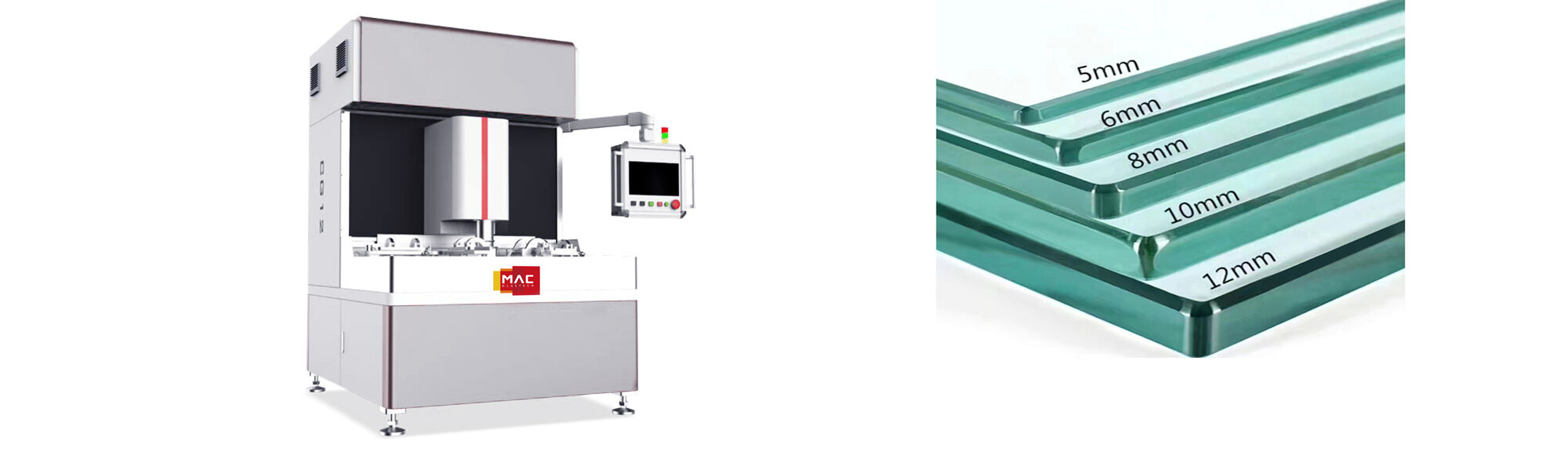
A glass edge grinder represents an essential piece of equipment designed specifically for processing and refining the edges of glass panels, sheets, and components. This specialized machinery performs critical smoothing, beveling, and polishing operations that transform rough-cut glass edges into safe, aesthetically pleasing, and functional surfaces. The glass edge grinder operates through a systematic process where abrasive grinding wheels rotate at controlled speeds to remove sharp edges, create precise angles, and produce mirror-like finishes on glass materials of varying thicknesses and compositions. Modern glass edge grinder systems incorporate advanced motor technology, variable speed controls, and precision positioning mechanisms that ensure consistent results across different glass types including float glass, tempered glass, laminated glass, and decorative glass varieties. The equipment typically features multiple grinding stations, each equipped with different grit levels ranging from coarse to fine, allowing operators to progress through sequential stages that gradually refine the edge quality. Water circulation systems integrated into the glass edge grinder design serve dual purposes of cooling the grinding surface to prevent thermal stress and flushing away glass particles to maintain optimal grinding conditions. The versatility of a glass edge grinder extends across numerous production environments, from small-scale fabrication shops handling custom architectural projects to large manufacturing facilities producing standardized glass products for construction, automotive, furniture, and appliance industries. Technological advancements have introduced computerized controls, automated feeding systems, and digital measurement tools that enhance precision and productivity. The glass edge grinder accommodates various edge profiles including flat edges, pencil edges, beveled edges, and ornamental designs, making it indispensable for creating both functional safety edges and decorative artistic elements that meet stringent quality standards and aesthetic requirements in contemporary glass processing applications.

New Products

Investing in a glass edge grinder delivers substantial practical benefits that directly impact your production efficiency, product quality, and business profitability. The primary advantage centers on safety enhancement, as this equipment eliminates dangerous sharp edges that pose cutting hazards during handling, installation, and everyday use of glass products. By processing raw glass edges into smooth, rounded surfaces, you protect workers, installers, and end-users from potential injuries while simultaneously reducing liability concerns and insurance costs associated with workplace accidents. Beyond safety considerations, a glass edge grinder significantly elevates the visual appeal of your glass products, creating professional-grade finishes that command premium pricing in competitive markets. The polished edges produced by quality grinding equipment reflect light beautifully, contributing to the overall aesthetic value of mirrors, tabletops, shelving, shower enclosures, and architectural glass installations. Production speed represents another compelling advantage, as motorized grinding operations complete edge finishing tasks exponentially faster than manual methods, allowing you to fulfill larger orders within tighter deadlines and increase overall throughput without expanding workforce size. The consistency achieved through mechanized grinding ensures uniform edge quality across entire production runs, eliminating the variations inherent in hand-finishing techniques and reducing rejection rates due to quality inconsistencies. Cost efficiency emerges through multiple channels: reduced labor expenses as fewer workers accomplish more output, decreased material waste from fewer mistakes and breakages, and extended tool life through proper mechanical operation compared to manual abrasive methods. A glass edge grinder also expands your service capabilities, enabling you to accept diverse projects requiring specialized edge profiles that would otherwise necessitate outsourcing to specialized facilities, thereby retaining more revenue within your operation. The equipment accommodates various glass thicknesses and dimensions, providing operational flexibility that adapts to changing customer demands and market trends without requiring multiple specialized tools. Maintenance requirements remain manageable with routine cleaning, periodic wheel replacement, and basic mechanical servicing that most facilities can perform in-house. The precision achievable with a glass edge grinder meets stringent industry standards and building codes, ensuring your products pass inspections and certifications required for commercial and residential installations. Furthermore, the professional results generated by quality grinding equipment enhance your business reputation, leading to increased customer satisfaction, repeat business, and positive referrals that drive sustainable growth in competitive glass fabrication markets.

Latest News

What Are the Benefits of Using an Automated Glass Sorting System?

24

Sep

What Are the Benefits of Using an Automated Glass Sorting System?

Revolutionizing Glass Recycling Through Advanced Automation The glass recycling industry is undergoing a remarkable transformation with the integration of automated glass sorting systems. These sophisticated technologies are reshaping how recycling f...
View More
What Types of Coatings Are Applied in a Glass Coating Line?

24

Sep

What Types of Coatings Are Applied in a Glass Coating Line?

Understanding Modern Glass Coating Technologies Glass coating technology has revolutionized the way we enhance and protect glass surfaces across various industries. From architectural applications to automotive windshields, the glass coating line pro...
View More
How Do Glass Drilling Machines Achieve Precision and Accuracy?

28

Oct

How Do Glass Drilling Machines Achieve Precision and Accuracy?

The Engineering Marvel Behind Modern Glass Drilling Technology Glass drilling machines represent the pinnacle of precision engineering in today's manufacturing landscape. These sophisticated pieces of equipment combine advanced technology with mechan...
View More
How Can Grinding Machines Enhance Surface Finish and Dimensional Accuracy?

19

Dec

How Can Grinding Machines Enhance Surface Finish and Dimensional Accuracy?

Manufacturing precision has reached unprecedented levels in modern industrial applications, where surface finish quality and dimensional accuracy determine product performance and market competitiveness. Advanced grinding machines represent the corne...
View More

Get a Free Quote

Our representative will contact you soon.
Email
Name
Company Name
Message
0/1000

glass edge grinder

Precision Control Technology for Superior Edge Quality

Precision Control Technology for Superior Edge Quality

The advanced precision control technology integrated into modern glass edge grinder systems represents a transformative feature that fundamentally elevates the quality and consistency of edge finishing operations. This sophisticated technology encompasses multiple interconnected components working in harmony to deliver exceptional results that manual processes simply cannot replicate. At the core of this precision system lies digital speed control mechanisms that allow operators to adjust grinding wheel rotation speeds with exceptional accuracy, typically ranging from 1500 to 3500 revolutions per minute depending on glass thickness, hardness, and desired finish quality. This variable speed capability proves crucial because different glass types and edge profiles require specific grinding parameters to achieve optimal results without inducing stress fractures or surface defects. The precision positioning systems incorporated into quality glass edge grinder equipment utilize linear guide rails and ball screw assemblies that maintain exact spatial relationships between the grinding wheels and glass surfaces throughout the entire processing cycle. These mechanical components eliminate wobble, vibration, and deviation that compromise edge straightness and perpendicularity, ensuring that finished edges meet tight tolerance specifications required for frameless installations and precision assemblies. Advanced glass edge grinder models feature digital measurement displays and programmable logic controllers that enable operators to input exact dimensions, angles, and processing parameters, which the machine then executes with remarkable repeatability across hundreds or thousands of pieces. This programmability eliminates human error variations and enables less experienced operators to produce professional-grade results after minimal training periods. The precision technology extends to automated feeding mechanisms that advance glass panels through sequential grinding stages at controlled rates, maintaining consistent material removal and preventing the overheating or chipping that occurs with irregular feed speeds. Sensor systems integrated throughout the glass edge grinder monitor operational parameters including motor load, water flow, wheel wear, and glass position, automatically adjusting settings or alerting operators when conditions drift outside optimal ranges. This intelligent monitoring prevents defects before they occur and extends equipment lifespan by avoiding stress conditions that accelerate component wear. The practical value of precision control technology manifests in measurably superior product quality, with finished edges exhibiting uniform smoothness, consistent profile geometry, and optical clarity that enhances the perceived value of glass products in premium market segments where discerning customers readily distinguish between adequate and exceptional craftsmanship.
Versatile Multi-Stage Grinding Capability for Comprehensive Edge Finishing

Versatile Multi-Stage Grinding Capability for Comprehensive Edge Finishing

The versatile multi-stage grinding capability built into professional glass edge grinder systems delivers comprehensive edge finishing solutions that address the complete spectrum of processing requirements from initial rough grinding through final polishing in a single integrated workflow. This multi-stage architecture represents a significant advancement over single-station equipment that necessitates multiple machine setups or manual transitions between processing steps, each introducing opportunities for positioning errors, handling damage, and workflow inefficiencies. A typical multi-stage glass edge grinder configuration incorporates four to ten sequential grinding stations, each equipped with progressively finer abrasive wheels that systematically refine edge surfaces through controlled material removal stages. The initial rough grinding station utilizes coarse-grit diamond wheels, typically 120 to 180 grit, that rapidly remove substantial material to establish the primary edge geometry, eliminate chips from cutting operations, and create the foundational profile shape. Subsequent intermediate grinding stages employ medium-grit wheels ranging from 240 to 400 grit that smooth the surface texture left by rough grinding while continuing to refine the edge profile geometry toward final specifications. The fine grinding stations utilize 600 to 800 grit wheels that remove the scratches and surface irregularities from previous stages, creating increasingly smooth surfaces that begin approaching optical quality. Final polishing stations employ felt wheels with cerium oxide compounds or ultra-fine diamond abrasives that generate mirror-like finishes with exceptional light reflection properties and tactile smoothness. The sequential progression through multiple stages in a single glass edge grinder setup eliminates the handling required when transferring glass between separate machines, thereby reducing breakage risk and labor costs while accelerating production cycles. This integrated approach proves particularly valuable for high-volume operations where throughput efficiency directly impacts profitability and competitiveness. The versatility extends beyond simple flat edge grinding to encompass diverse profile capabilities including beveled edges at various angles typically ranging from 5 to 45 degrees, pencil round edges with small radius curves, and ornamental profiles with complex geometries. Quality glass edge grinder systems incorporate adjustable wheel positioning mechanisms and interchangeable wheel profiles that enable rapid changeovers between different edge styles without extensive reconfiguration time. This flexibility allows fabricators to efficiently serve diverse customer requirements and market segments without maintaining multiple specialized machines. The multi-stage capability also accommodates varying glass thicknesses, typically from 3 millimeters to 25 millimeters, through adjustable height settings and wheel configurations, providing operational versatility that maximizes equipment utilization across different project types and customer specifications.
Efficient Water Cooling and Waste Management System for Optimal Performance

Efficient Water Cooling and Waste Management System for Optimal Performance

The efficient water cooling and waste management system engineered into professional glass edge grinder equipment constitutes a critical feature that directly impacts grinding performance, edge quality, equipment longevity, and workplace safety. This comprehensive system addresses multiple operational challenges simultaneously through intelligent design that integrates cooling, lubrication, cleaning, and waste removal functions into a cohesive solution. The primary cooling function serves essential purposes during glass edge grinding operations where friction between rotating abrasive wheels and glass surfaces generates substantial heat that, if uncontrolled, causes thermal stress leading to micro-cracks, edge chips, and catastrophic glass fracture. The water cooling system in a quality glass edge grinder continuously delivers precisely metered water flow directly to the grinding interface, absorbing and dissipating frictional heat before temperatures reach levels that compromise glass integrity. This constant cooling maintains glass surfaces within safe temperature ranges, typically below 60 degrees Celsius, preventing the thermal shock conditions that cause breakage and ensuring consistent material properties throughout the grinding process. Beyond temperature control, the water flow serves crucial lubrication functions that reduce friction coefficients between abrasive particles and glass surfaces, resulting in smoother cutting action, reduced grinding wheel wear, and superior surface finishes. The lubrication effect enables glass edge grinder operators to achieve finer surface textures with given abrasive grits compared to dry grinding methods, effectively extending the capability range of each grinding station. The cleaning function performed by flowing water continuously flushes away glass particles, abrasive debris, and grinding swarf from the work zone, preventing particle accumulation that scratches surfaces, clogs abrasive structures, and degrades grinding efficiency. This constant flushing action maintains optimal cutting conditions throughout extended production runs, ensuring consistent edge quality from the first piece to the last piece in high-volume manufacturing scenarios. Professional glass edge grinder systems incorporate closed-loop water recirculation designs that collect, filter, and reuse coolant water, dramatically reducing water consumption compared to once-through systems while simultaneously addressing environmental concerns and utility costs. The filtration components within these recirculation systems employ multiple stages including settlement tanks, screen filters, and sometimes magnetic separators that remove glass particles and contaminants, returning clean water to the grinding stations. This filtered water prevents abrasive particle contamination that accelerates wheel wear and degrades grinding performance. The waste management aspect encompasses collection systems that capture glass slurry, consisting of water and ground glass particles, directing it to designated collection points where solid waste settles for proper disposal according to environmental regulations. Effective waste management prevents workplace hazards associated with slippery floors, equipment contamination, and environmental violations that could result in regulatory penalties and operational shutdowns.