Leading Grinding Machine Manufacturers | Precision Equipment & Advanced Technology Solutions

All Categories

Get a Free Quote

Our representative will contact you soon.
Email
Name
Company Name
Message
0/1000

grinding machine manufacturers

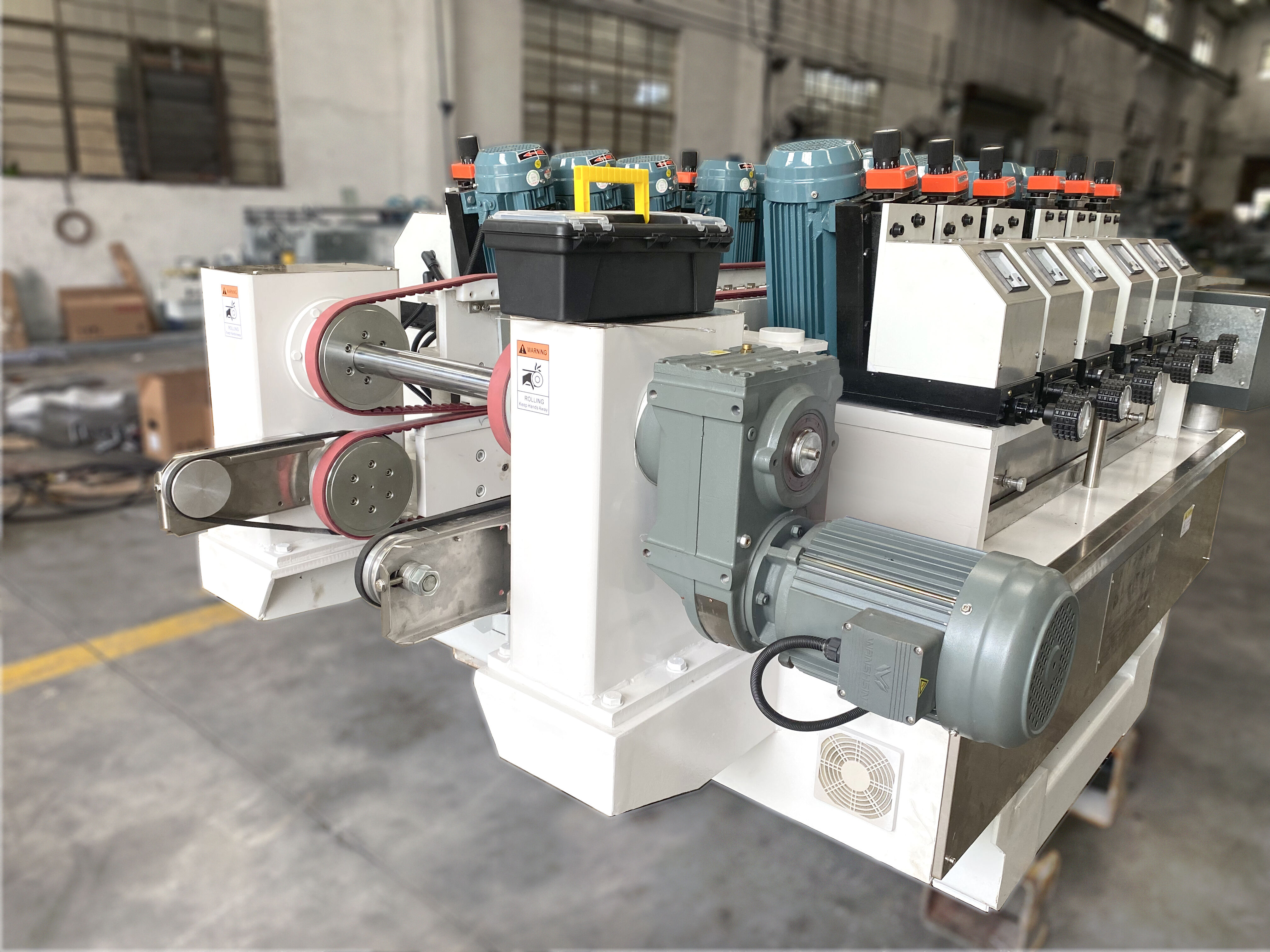
Grinding machine manufacturers represent a crucial sector within the industrial equipment industry, specializing in the design, production, and distribution of precision grinding equipment used across diverse manufacturing applications. These manufacturers create machines that perform essential material removal processes through abrasive cutting, enabling businesses to achieve exceptionally tight tolerances and superior surface finishes on various workpieces. The primary functions of equipment from grinding machine manufacturers include surface finishing, dimensional control, sharpening of cutting tools, and removal of excess material from metal, ceramic, glass, and composite components. Modern grinding machine manufacturers integrate advanced technological features such as computer numerical control systems, automatic tool changers, precision measurement devices, and intelligent monitoring capabilities that enhance operational efficiency and product quality. These manufacturers employ sophisticated engineering principles to develop equipment ranging from simple bench grinders to complex multi-axis computer-controlled systems. Their product portfolios typically encompass cylindrical grinders for rotating workpieces, surface grinders for flat components, centerless grinders for high-volume production, tool and cutter grinders for precision sharpening, and specialized machines for unique applications. The technological features embedded by grinding machine manufacturers include vibration dampening systems, thermal stability controls, advanced spindle designs, precision linear guides, and adaptive grinding cycles that automatically adjust parameters based on real-time feedback. Applications for equipment from grinding machine manufacturers span automotive component manufacturing, aerospace precision parts production, medical device fabrication, toolmaking operations, bearing production, hydraulic component manufacturing, and general metalworking facilities. These manufacturers serve industries requiring exceptional dimensional accuracy, typically working within micron-level tolerances. Leading grinding machine manufacturers continuously invest in research and development to incorporate emerging technologies such as artificial intelligence for predictive maintenance, IoT connectivity for remote monitoring, and eco-friendly designs that reduce energy consumption and coolant usage. Their commitment to innovation ensures that customers receive equipment capable of meeting increasingly stringent quality standards while maintaining competitive production costs and operational flexibility in today's demanding manufacturing environment.

New Product Releases

Grinding machine manufacturers deliver substantial practical benefits that directly impact customer profitability and operational success. First, these manufacturers provide equipment that achieves unmatched precision, allowing businesses to produce components with tolerances measured in microns, which eliminates costly rework and reduces material waste significantly. This precision capability means customers can confidently bid on contracts requiring tight specifications that would be impossible with conventional machining methods. Second, grinding machine manufacturers offer versatile solutions that handle multiple materials and part geometries, giving customers flexibility to diversify their product offerings without investing in separate specialized equipment for each application. This versatility translates to better equipment utilization rates and faster return on investment. Third, modern equipment from grinding machine manufacturers incorporates automation features that reduce labor costs and minimize human error, enabling businesses to operate with smaller crews while maintaining consistent quality across production runs. Fourth, these manufacturers design machines with durability in mind, using robust construction and quality components that withstand demanding production environments, resulting in longer equipment lifespans and lower total cost of ownership. Fifth, grinding machine manufacturers provide comprehensive technical support, training programs, and readily available replacement parts, ensuring minimal downtime when maintenance or repairs become necessary. This support infrastructure gives customers peace of mind and protects their production schedules from unexpected disruptions. Sixth, energy-efficient designs from responsible grinding machine manufacturers help customers reduce utility expenses while meeting environmental compliance requirements, which becomes increasingly important as sustainability regulations tighten globally. Seventh, the advanced control systems offered by grinding machine manufacturers simplify operation, allowing less experienced operators to produce quality results quickly after minimal training, addressing the skilled labor shortage many manufacturers face today. Eighth, these manufacturers often provide customization options that address specific production challenges unique to individual customers, rather than forcing businesses to adapt their processes to standard equipment limitations. Ninth, equipment from reputable grinding machine manufacturers maintains strong resale value, protecting the customer's capital investment and providing flexibility for future equipment upgrades or business transitions. Tenth, the productivity improvements enabled by modern grinding technology from leading manufacturers allow customers to increase output without expanding floor space, which is particularly valuable in facilities with limited room for growth. These combined advantages make partnering with quality grinding machine manufacturers a strategic decision that strengthens competitive positioning, improves profit margins, and builds sustainable business operations capable of adapting to changing market demands and technological advances in manufacturing.

Tips And Tricks

How Does a Glass Sorting System Integrate with Other Glass Lines?

24

Sep

How Does a Glass Sorting System Integrate with Other Glass Lines?

Seamless Integration of Modern Glass Sorting Technologies The integration of a glass sorting system into existing production lines represents a significant advancement in glass manufacturing and recycling operations. These sophisticated systems utili...
View More
What Factors Should You Consider When Choosing Automotive Glass Processing Methods?

28

Oct

What Factors Should You Consider When Choosing Automotive Glass Processing Methods?

The Complete Guide to Modern Automotive Glass Manufacturing The automotive glass processing industry has undergone significant transformation in recent years, driven by technological advancements and evolving vehicle design requirements. As manufactu...
View More
How Do Glass Drilling Machines Achieve Precision and Accuracy?

28

Oct

How Do Glass Drilling Machines Achieve Precision and Accuracy?

The Engineering Marvel Behind Modern Glass Drilling Technology Glass drilling machines represent the pinnacle of precision engineering in today's manufacturing landscape. These sophisticated pieces of equipment combine advanced technology with mechan...
View More
What Maintenance Practices Keep Double Edgers Performing Optimally?

24

Nov

What Maintenance Practices Keep Double Edgers Performing Optimally?

Double edgers represent sophisticated industrial machinery that requires systematic maintenance protocols to ensure consistent performance and operational longevity. These precision instruments, commonly utilized in glass processing facilities and ma...
View More

Get a Free Quote

Our representative will contact you soon.
Email
Name
Company Name
Message
0/1000

grinding machine manufacturers

Advanced Precision Engineering and Quality Control Systems

Advanced Precision Engineering and Quality Control Systems

Grinding machine manufacturers distinguish themselves through their commitment to advanced precision engineering and comprehensive quality control systems that ensure every piece of equipment meets exacting performance standards. These manufacturers employ sophisticated design methodologies incorporating finite element analysis, computational fluid dynamics, and thermal modeling to optimize machine structures for maximum rigidity and minimal deflection under operational loads. This engineering rigor results in equipment capable of maintaining dimensional accuracy even during extended production runs and varying thermal conditions. The quality control systems implemented by leading grinding machine manufacturers include multi-stage inspection processes where critical components undergo measurement verification using coordinate measuring machines, laser interferometers, and precision gauging systems before assembly. During manufacturing, these manufacturers utilize advanced machining centers and precision grinding equipment to produce components with exceptional geometric accuracy, ensuring proper fit and function throughout the machine's operational life. The spindle assemblies, which represent the heart of any grinding machine, receive particular attention from grinding machine manufacturers, with bearing preloads carefully optimized, balance verified to ISO standards, and thermal characteristics thoroughly tested to guarantee smooth, vibration-free operation at all speed ranges. Additionally, grinding machine manufacturers implement rigorous testing protocols where completed machines undergo performance validation including accuracy checks, surface finish verification, and thermal stability assessment under conditions simulating actual production environments. This comprehensive approach to precision engineering and quality control provides customers with reliable equipment that consistently produces parts meeting their specifications without constant adjustment or recalibration. The investment that grinding machine manufacturers make in engineering excellence and quality assurance translates directly to customer benefits including reduced scrap rates, improved process capability indices, and confidence in meeting customer commitments. Furthermore, the precision achieved through these manufacturing practices enables customers to pursue opportunities in high-value markets such as aerospace, medical devices, and advanced automotive applications where tolerances and surface finish requirements exceed capabilities of conventional machining methods. The documentation provided by grinding machine manufacturers, including detailed accuracy statements and performance certifications, gives customers tangible evidence of equipment capabilities that can be shared with their own customers and quality auditors, strengthening business relationships and facilitating contract awards for precision work.
Comprehensive Technical Support and Customer Service Excellence

Comprehensive Technical Support and Customer Service Excellence

Grinding machine manufacturers differentiate themselves significantly through comprehensive technical support and customer service excellence that extends far beyond the initial equipment sale. These manufacturers recognize that customer success depends not only on equipment quality but also on ongoing support throughout the machine's operational lifetime. Leading grinding machine manufacturers maintain dedicated technical support teams staffed with experienced applications engineers who possess deep knowledge of grinding processes, machine operation, and troubleshooting methodologies. These specialists provide customers with responsive assistance via multiple communication channels including phone, email, video conferencing, and remote diagnostic connections that allow them to observe machine operation and identify issues without requiring on-site visits for every concern. The training programs offered by grinding machine manufacturers represent another critical support element, with comprehensive curricula covering basic operation, advanced programming, preventive maintenance procedures, and optimization techniques that help customers maximize equipment productivity and longevity. These training sessions can be conducted at the manufacturer's facility, at the customer's location, or through interactive online platforms, providing flexibility to accommodate different learning preferences and scheduling constraints. Grinding machine manufacturers also maintain extensive parts inventories and efficient logistics networks ensuring rapid delivery of replacement components when needed, minimizing production disruptions caused by equipment downtime. The service networks established by grinding machine manufacturers include strategically located field service technicians capable of performing on-site installations, preventive maintenance, emergency repairs, and equipment upgrades, providing customers with local support resources backed by factory expertise. Many grinding machine manufacturers offer preventive maintenance programs where technicians perform scheduled inspections and service procedures, identifying potential issues before they cause unexpected failures and extending equipment operational life. The documentation provided by grinding machine manufacturers includes detailed operator manuals, maintenance schedules, parts diagrams, and programming guides that empower customers to handle routine tasks independently while knowing expert assistance remains available when needed. Additionally, grinding machine manufacturers frequently organize user conferences, webinars, and facility tours that foster knowledge sharing among customers, create networking opportunities, and provide insights into emerging technologies and best practices. This commitment to customer service excellence builds long-term relationships between grinding machine manufacturers and their customers, creating partnerships rather than transactional vendor relationships. Customers benefit from this support infrastructure through improved equipment uptime, faster resolution of technical challenges, enhanced operator competency, and access to continuous improvement opportunities that keep their grinding operations competitive as manufacturing requirements evolve and new technologies emerge in the precision machining industry.
Innovation and Technology Integration for Future-Ready Manufacturing

Innovation and Technology Integration for Future-Ready Manufacturing

Grinding machine manufacturers lead the precision manufacturing industry through continuous innovation and technology integration that prepares customers for future production challenges and opportunities. These manufacturers invest substantial resources in research and development activities focused on incorporating emerging technologies that enhance equipment capabilities, improve operational efficiency, and expand application possibilities. The integration of Industry 4.0 technologies by forward-thinking grinding machine manufacturers includes connectivity features enabling machines to communicate with enterprise resource planning systems, manufacturing execution systems, and quality management databases, creating seamless information flow throughout production operations. This connectivity allows grinding machine manufacturers to provide customers with real-time production monitoring, automated data collection for statistical process control, and traceability systems that document processing parameters for every part produced, addressing increasingly stringent quality documentation requirements in regulated industries. Artificial intelligence and machine learning algorithms incorporated by innovative grinding machine manufacturers enable predictive maintenance capabilities that analyze vibration patterns, acoustic signatures, power consumption trends, and thermal characteristics to forecast component wear and potential failures before they cause unplanned downtime. These intelligent systems learn from operational data, continuously improving their diagnostic accuracy and providing customers with actionable insights that optimize maintenance scheduling and reduce total cost of ownership. Grinding machine manufacturers also develop adaptive control systems that automatically adjust grinding parameters based on real-time measurements of cutting forces, acoustic emissions, and in-process gauging data, ensuring consistent results despite variations in workpiece material properties, wheel condition, or environmental factors. The simulation capabilities provided by technologically advanced grinding machine manufacturers allow customers to virtually test grinding strategies, optimize cycle times, and validate programs before committing to actual production, reducing development time and eliminating costly trial-and-error approaches. Environmental considerations drive grinding machine manufacturers to develop eco-friendly technologies including minimum quantity lubrication systems that dramatically reduce coolant consumption, energy-efficient drive systems that lower power consumption, and advanced filtration systems that extend coolant life while improving workplace air quality. The modular design philosophies adopted by progressive grinding machine manufacturers facilitate future upgrades and technology additions, protecting customer investments by allowing equipment capabilities to expand as business needs evolve without requiring complete machine replacement. Collaborative relationships between grinding machine manufacturers and research institutions, technology partners, and forward-thinking customers accelerate innovation cycles and ensure that new developments address real-world manufacturing challenges rather than pursuing technology for its own sake. Customers partnering with innovative grinding machine manufacturers gain competitive advantages through access to cutting-edge capabilities, improved productivity, enhanced quality consistency, and operational flexibility that positions their businesses to capitalize on emerging market opportunities and navigate disruptions in global manufacturing landscapes.