CNC Tool Grinder: Precision Grinding Solutions for Enhanced Tool Performance and Cost Savings

All Categories

Get a Free Quote

Our representative will contact you soon.
Email
Name
Company Name
Message
0/1000

cnc tool grinder

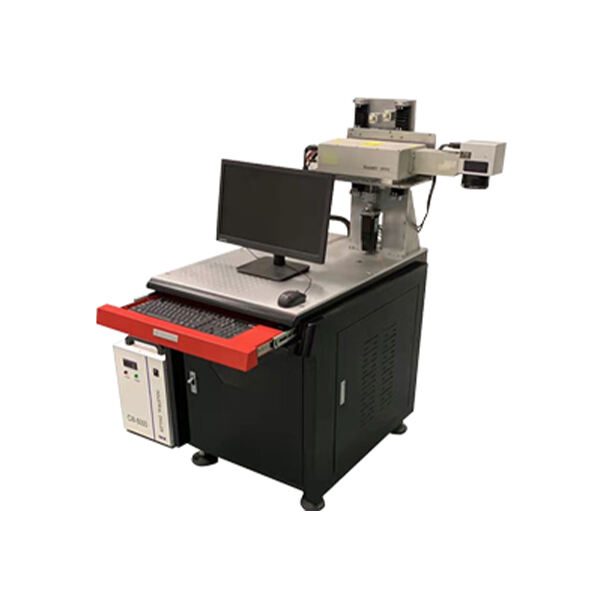
A CNC tool grinder represents a sophisticated precision machining solution designed to sharpen, recondition, and manufacture cutting tools with exceptional accuracy. This advanced equipment combines computer numerical control technology with specialized grinding processes to deliver consistent, repeatable results across various tool geometries. The primary functions of a CNC tool grinder include resharpening worn drill bits, end mills, reamers, and custom cutting tools while maintaining their original specifications. These machines excel at creating complex tool geometries, including multiple flute configurations, variable helix angles, and specialized cutting edges that would be impossible to achieve through manual grinding methods. Technological features of modern CNC tool grinders incorporate multi-axis simultaneous movement capabilities, typically ranging from four to six axes, enabling the machine to approach the workpiece from virtually any angle. High-resolution linear scales and rotary encoders ensure positioning accuracy within microns, while advanced software interfaces allow operators to program intricate tool profiles through intuitive graphical interfaces. Many systems include automatic tool measurement probes that verify dimensions during the grinding process, ensuring quality control without manual intervention. The grinding wheels themselves are precisely balanced and dressed automatically to maintain optimal cutting performance throughout production runs. Applications for CNC tool grinders span numerous industries, including aerospace manufacturing, automotive production, medical device fabrication, and general precision machining operations. Toolrooms utilize these machines to extend the service life of expensive carbide and high-speed steel cutting tools, significantly reducing tooling costs. Contract tool manufacturers rely on CNC tool grinders to produce specialized custom cutting tools that meet exacting customer specifications. The versatility of these machines allows facilities to grind everything from miniature micro-drills measuring less than one millimeter in diameter to large-format tools exceeding several inches. With their ability to process various tool materials including carbide, high-speed steel, polycrystalline diamond, and ceramic cutting tools, CNC tool grinders have become indispensable equipment in modern manufacturing environments where precision and efficiency directly impact profitability.

New Products

Investing in a CNC tool grinder delivers substantial practical benefits that directly improve your manufacturing operations and bottom line. First and foremost, these machines dramatically reduce your tooling expenses by allowing you to recondition worn cutting tools multiple times before replacement becomes necessary. Instead of discarding expensive carbide end mills or specialized drills after they become dull, you can restore them to like-new condition at a fraction of the replacement cost. This capability proves especially valuable for custom or specialized tools that carry premium price tags and long lead times from suppliers. The precision offered by CNC tool grinders ensures that every resharpened tool performs identically to its original specification, eliminating the performance variations common with manual grinding methods. Your production quality remains consistent because tools maintain their designed cutting geometries, which translates directly into better surface finishes, tighter tolerances, and fewer rejected parts. Automation features substantially decrease the labor requirements for tool maintenance, freeing skilled workers to focus on higher-value production tasks rather than standing at grinding machines. Once programmed, a CNC tool grinder can reproduce complex tool geometries repeatedly without operator intervention, running unattended during breaks or overnight shifts to maximize productivity. The software-driven nature of these machines eliminates the learning curve associated with manual tool grinding, where years of experience were once required to produce quality results. New operators can achieve professional-grade outcomes after minimal training by simply loading proven programs and following straightforward setup procedures. Flexibility represents another crucial advantage, as a single CNC tool grinder can handle an enormous variety of tool types and sizes, eliminating the need for multiple specialized grinding machines. You can switch from grinding micro-drills to large face mills within minutes by changing fixtures and loading different programs. This versatility proves invaluable for job shops and toolrooms serving diverse customers with varying requirements. The speed at which CNC tool grinders operate surpasses manual methods significantly, completing complex grinding operations in minutes rather than hours. This efficiency allows you to maintain smaller tool inventories since resharpening turnaround times decrease dramatically, reducing the capital tied up in backup tooling. Quality control becomes more manageable because digital systems maintain detailed records of grinding parameters, creating traceability for critical aerospace or medical applications. The machines also compensate automatically for grinding wheel wear, maintaining dimensional accuracy throughout extended production runs without constant operator adjustment. Environmental benefits include reduced waste generation since tools receive multiple life cycles rather than premature disposal. Your facility becomes more sustainable while simultaneously cutting costs, a combination that appeals to environmentally conscious customers and regulatory compliance requirements.

Tips And Tricks

What Are the Future Trends in Intelligent Glass Sorting Systems?

24

Sep

What Are the Future Trends in Intelligent Glass Sorting Systems?

The Evolution of Advanced Glass Sorting Technology The landscape of glass recycling and processing is undergoing a remarkable transformation through intelligent glass sorting systems. These sophisticated technologies are revolutionizing how we handle...
View More
How Do Glass Drilling Machines Handle Different Glass Thicknesses Safely?

28

Oct

How Do Glass Drilling Machines Handle Different Glass Thicknesses Safely?

Understanding Modern Glass Drilling Technology and Safety Mechanisms The world of glass fabrication has evolved significantly with the introduction of advanced glass drilling machines that can handle various glass thicknesses with remarkable precisio...
View More
What Should Manufacturers Consider When Selecting Equipment for Insulating Glass Production?

19

Dec

What Should Manufacturers Consider When Selecting Equipment for Insulating Glass Production?

Modern insulating glass manufacturing demands precision, efficiency, and cutting-edge technology to meet the growing requirements of energy-efficient building construction. Selecting the right equipment for insulating glass production involves carefu...
View More
Why Is Automated Insulating Glass Production Increasing in Large Factories?

19

Dec

Why Is Automated Insulating Glass Production Increasing in Large Factories?

The construction and manufacturing industries are experiencing a significant shift toward automation, with automated insulating glass production leading this transformation in large-scale factories. This evolution represents more than just technologi...
View More

Get a Free Quote

Our representative will contact you soon.
Email
Name
Company Name
Message
0/1000

cnc tool grinder

Unmatched Precision Through Advanced Multi-Axis Control Systems

Unmatched Precision Through Advanced Multi-Axis Control Systems

The cornerstone advantage of a CNC tool grinder lies in its extraordinary precision capabilities, achieved through sophisticated multi-axis control systems that orchestrate grinding wheel movements with microscopic accuracy. Unlike conventional manual grinding approaches where results depend heavily on operator skill and physical steadiness, these computerized systems execute programmed tool paths with absolute repeatability, ensuring that the tenth tool ground matches the first with identical specifications. The multi-axis configuration, typically incorporating four, five, or six independently controlled axes, permits the grinding wheel to approach the workpiece from optimal angles while maintaining precise tangency to the tool surface throughout the cutting process. This simultaneous multi-axis interpolation enables the creation of complex three-dimensional tool geometries that would challenge even the most experienced manual grinder, including variable helix angles, unequal indexing for vibration reduction, and specialized chip-breaking features. The positioning resolution of modern linear and rotary encoders reaches sub-micron levels, meaning the machine knows its exact position within fractions of a thousandth of a millimeter at all times. This positional awareness translates directly into ground tools that meet the most demanding tolerance requirements for critical applications in aerospace turbine manufacturing, medical implant production, and precision mold making. Furthermore, the closed-loop feedback systems continuously monitor actual positions against commanded positions, instantly correcting any deviations caused by thermal expansion, mechanical wear, or process forces. The grinding software incorporates sophisticated algorithms that calculate optimal wheel paths based on desired tool geometry, automatically generating collision-free toolpaths that maximize grinding efficiency while protecting expensive equipment from crashes. Operators benefit from simulation capabilities that display the entire grinding sequence on-screen before any actual machining occurs, allowing verification of programs and elimination of potential errors in a virtual environment. The precision extends beyond spatial positioning to include rotational accuracy, with precision spindles maintaining angular positions within arc-seconds, crucial for creating perfectly symmetrical multi-flute tools where even slight index errors would produce imbalanced cutting forces and premature tool failure. This level of accuracy ensures that resharpened tools perform identically to new ones, maintaining your production quality standards while dramatically reducing tooling costs through extended tool life cycles.
Dramatically Reduced Operating Costs Through Tool Life Extension

Dramatically Reduced Operating Costs Through Tool Life Extension

The financial benefits of implementing a CNC tool grinder in your operation extend far beyond the initial equipment investment, delivering substantial ongoing cost reductions through extended tool life management and decreased dependency on external grinding services. Cutting tools represent one of the most significant recurring expenses in manufacturing operations, particularly when using premium carbide grades, coated tools, or specialized geometries designed for difficult materials. A CNC tool grinder transforms these consumable expenses into manageable reconditioning costs by enabling multiple resharpening cycles that restore tools to full performance capability. Industry data demonstrates that high-quality end mills and drills can typically undergo five to ten resharpening cycles before reaching the end of their useful life, effectively multiplying your initial tool investment by that factor. The mathematics prove compelling when considering that professional resharpening services typically charge thirty to fifty percent of the new tool cost per reconditioning cycle, while in-house grinding with your own CNC tool grinder reduces that expense to merely the cost of grinding wheels, electricity, and minimal operator time. For facilities using hundreds or thousands of cutting tools monthly, these savings accumulate rapidly into substantial annual figures that can justify equipment acquisition within remarkably short payback periods. Beyond direct resharpening savings, maintaining tools in-house eliminates the hidden costs associated with outsourcing, including shipping expenses, administrative overhead for managing vendor relationships, and most significantly, the inventory carrying costs required to maintain adequate tool stocks during the turnaround time external services require. When tools can be reconditioned overnight in your own facility rather than waiting days or weeks for return from outside grinding services, you dramatically reduce the safety stock quantities needed to prevent production interruptions. This inventory reduction releases working capital for other productive purposes while simultaneously decreasing storage space requirements and the risk of obsolescence when design changes render stockpiled tools useless. The ability to grind custom tools in-house provides additional cost advantages by eliminating premium pricing that specialty tool manufacturers charge for non-standard geometries, allowing you to design optimal tools for specific applications without budget constraints limiting innovation. Your engineering team gains freedom to experiment with cutting edge designs, test variations, and optimize tool geometry for particular materials or machining strategies, accelerating process development while controlling costs.
Operational Flexibility Enabling Rapid Response to Changing Production Demands

Operational Flexibility Enabling Rapid Response to Changing Production Demands

Manufacturing environments face constant pressure to adapt quickly to evolving customer requirements, new product introductions, and unexpected production challenges, making operational flexibility a critical competitive advantage. A CNC tool grinder delivers this essential adaptability by serving as a versatile platform capable of producing, modifying, and reconditioning virtually any cutting tool geometry your operations might require. This flexibility begins with the machine's ability to accommodate extreme size ranges, from delicate micro-tools measuring mere millimeters in diameter used in electronics manufacturing and medical device production, to substantial cutting tools several inches across employed in heavy industrial machining operations. The same machine that grinds precision surgical instrument cutters in the morning can recondition large face mills for steel plate machining in the afternoon, simply by changing work-holding fixtures and loading appropriate grinding programs. This versatility eliminates the need for multiple specialized grinding machines, each dedicated to narrow tool categories, substantially reducing both capital equipment costs and valuable floor space consumption. The programmable nature of CNC tool grinders means you can store unlimited tool libraries in the control system, accumulating proven grinding programs for every tool type your facility uses. When a particular tool requires resharpening, operators simply recall the stored program, load the tool, and initiate the automatic grinding cycle, achieving consistent results regardless of which shift performs the work or how much time has elapsed since that tool type was last processed. This program library becomes an invaluable knowledge repository that captures the expertise of your most skilled tool grinding specialists, preserving their techniques and making them accessible to all operators regardless of experience level. The flexibility extends to materials processing, as modern CNC tool grinders accommodate diverse cutting tool substrates including traditional high-speed steel, various carbide grades, polycrystalline diamond for non-ferrous machining, cubic boron nitride for hardened steel cutting, and ceramic materials for high-temperature applications. Specialized grinding wheels and optimized parameters for each material are easily managed through the control software, ensuring optimal results across this wide material spectrum. When urgent production needs arise, such as a broken custom form tool threatening to halt a critical manufacturing line, your CNC tool grinder becomes an emergency response asset capable of duplicating the tool geometry from the broken remnant or engineering drawings, potentially manufacturing a replacement in hours rather than the days or weeks external suppliers might require.