Glass Laser Marking Machine: Precision Marking Solutions for Glass Products

All Categories

Get a Free Quote

Our representative will contact you soon.
Email
Name
Company Name
Message
0/1000

glass laser marking machine

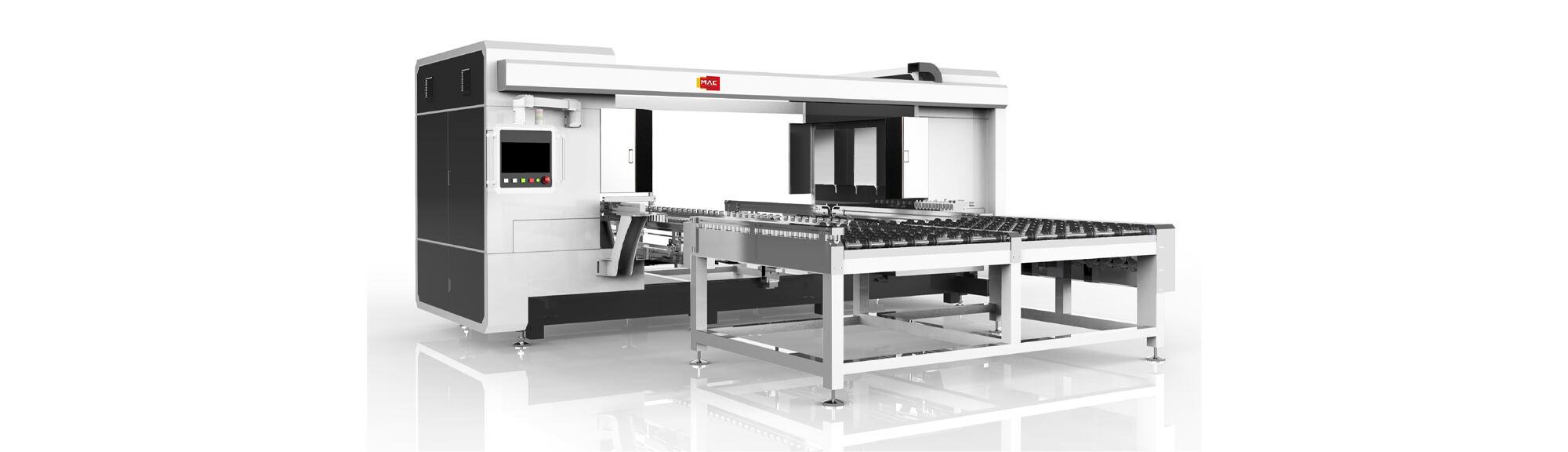
A glass laser marking machine represents a sophisticated technology designed to create permanent, high-quality markings on various glass surfaces with exceptional precision and clarity. This advanced equipment utilizes focused laser beams to etch, engrave, or mark glass materials without causing structural damage or creating unwanted stress points. The glass laser marking machine operates by directing concentrated light energy onto the glass surface, creating controlled micro-fractures or surface alterations that result in clearly visible marks. These machines are engineered specifically to handle the unique challenges associated with marking transparent and reflective materials like glass. The primary functions of a glass laser marking machine include creating text, logos, barcodes, QR codes, serial numbers, decorative patterns, and complex graphics on glass products. The technology excels at producing marks with remarkable detail and consistency, making it ideal for both industrial identification purposes and artistic applications. Technologically, these machines incorporate advanced laser sources, typically CO2 lasers or fiber lasers, each suited for different glass types and marking requirements. The precision positioning systems ensure accurate mark placement with repeatability measured in micrometers. Modern glass laser marking machines feature computer-controlled operation systems that allow operators to design, preview, and execute marking tasks through intuitive software interfaces. The machines accommodate various glass thicknesses and compositions, from thin sheet glass to thick borosilicate laboratory glassware. Application areas span numerous industries including automotive manufacturing for windshield identification, pharmaceutical packaging for medication bottles, beverage industry for brand logos on bottles, electronics for display panel marking, and decorative glass production for architectural elements. The technology proves invaluable in situations requiring traceability, brand protection, regulatory compliance, or aesthetic enhancement. These marking systems deliver non-contact processing, eliminating physical tool wear and maintaining consistent quality throughout production runs. The glass laser marking machine has become an essential tool for manufacturers seeking reliable, efficient, and versatile marking solutions that meet contemporary quality standards and production demands.

New Products

The glass laser marking machine offers numerous practical benefits that directly impact production efficiency and product quality for businesses across various sectors. First and foremost, these machines provide permanent marking solutions that withstand harsh environmental conditions including extreme temperatures, chemical exposure, moisture, and physical abrasion. Unlike printed labels or adhesive tags that can fade, peel, or fall off, laser marks become an integral part of the glass surface, ensuring long-term readability and traceability. This permanence proves especially valuable for products requiring lifetime identification or those subject to rigorous cleaning procedures. The precision capabilities of these systems enable manufacturers to create incredibly detailed marks with sharp edges and fine lines, accommodating small text sizes and intricate designs that traditional marking methods cannot achieve. This precision translates to better utilization of available space on products and enhanced aesthetic appeal. The non-contact nature of laser marking eliminates the risk of damaging delicate glass items during the marking process, reducing product rejection rates and associated costs. Traditional mechanical engraving methods can introduce stress points that weaken glass structures, but laser marking avoids this issue entirely. Speed represents another significant advantage, as glass laser marking machines complete marking tasks in seconds, dramatically increasing throughput compared to manual or conventional marking techniques. This rapid processing capability allows manufacturers to meet tight production schedules and respond quickly to market demands. The flexibility of these systems accommodates diverse product shapes, sizes, and designs without requiring expensive tooling changes or setup modifications. Operators can switch between different marking patterns instantly through software adjustments, enabling efficient small-batch production and customization without sacrificing productivity. Cost-effectiveness emerges through multiple channels including elimination of consumables like inks, solvents, or mechanical tools, minimal maintenance requirements due to the absence of moving parts in contact with products, and reduced labor costs through automation capabilities. Environmental benefits also deserve consideration, as laser marking produces no chemical waste, requires no cleaning solvents, and consumes relatively modest energy compared to alternative marking technologies. The clean operation aligns with modern sustainability initiatives and simplifies regulatory compliance. Integration capabilities allow these machines to connect seamlessly with existing production lines, quality control systems, and enterprise software platforms, enabling real-time data tracking and process optimization. Safety features built into modern glass laser marking machines protect operators while maintaining high productivity levels, with enclosed work areas and automated safety interlocks preventing accidental exposure to laser radiation.

Practical Tips

What Are the Future Trends in Intelligent Glass Sorting Systems?

24

Sep

What Are the Future Trends in Intelligent Glass Sorting Systems?

The Evolution of Advanced Glass Sorting Technology The landscape of glass recycling and processing is undergoing a remarkable transformation through intelligent glass sorting systems. These sophisticated technologies are revolutionizing how we handle...
View More
What Factors Influence Compatibility With Different Glass Sheet Sizes?

19

Dec

What Factors Influence Compatibility With Different Glass Sheet Sizes?

Glass manufacturing and processing industries face critical decisions when selecting equipment that can accommodate varying sheet dimensions. Modern fabrication facilities require versatile solutions that maintain precision across different material ...
View More
How Can Grinding Machines Enhance Surface Finish and Dimensional Accuracy?

19

Dec

How Can Grinding Machines Enhance Surface Finish and Dimensional Accuracy?

Manufacturing precision has reached unprecedented levels in modern industrial applications, where surface finish quality and dimensional accuracy determine product performance and market competitiveness. Advanced grinding machines represent the corne...
View More
What Should Manufacturers Consider When Selecting Equipment for Insulating Glass Production?

19

Dec

What Should Manufacturers Consider When Selecting Equipment for Insulating Glass Production?

Modern insulating glass manufacturing demands precision, efficiency, and cutting-edge technology to meet the growing requirements of energy-efficient building construction. Selecting the right equipment for insulating glass production involves carefu...
View More

Get a Free Quote

Our representative will contact you soon.
Email
Name
Company Name
Message
0/1000

glass laser marking machine

Unmatched Precision and Quality for Professional Results

Unmatched Precision and Quality for Professional Results

The glass laser marking machine delivers exceptional precision that sets it apart from all conventional marking technologies, enabling manufacturers to achieve professional-grade results consistently across every production run. This precision stems from advanced beam control systems that focus laser energy to spot sizes as small as a few micrometers, allowing for incredibly detailed work that captures even the finest design elements. When marking glass surfaces, this technology creates crisp, clear characters and graphics with sharp edges that remain perfectly legible regardless of viewing angle or lighting conditions. The machine maintains consistent mark depth and appearance throughout entire production batches, eliminating the variations that plague manual marking methods or mechanical engraving systems. This consistency proves crucial for applications requiring uniformity across thousands or millions of identical products, such as pharmaceutical bottles or automotive glass components. The superior quality extends to the visual appearance of marks, which can be customized to achieve different effects ranging from subtle frosted appearances to bold contrasting marks depending on laser parameters and glass composition. Manufacturers can create marks that enhance product aesthetics while fulfilling functional identification requirements, adding value without compromising design integrity. The precision positioning systems incorporated into these machines ensure accurate mark placement with repeatability that meets the strictest industrial standards, critical for applications where mark location affects product functionality or regulatory compliance. For complex graphics, logos, or decorative patterns, the glass laser marking machine reproduces intricate details with fidelity that mechanical methods simply cannot match, opening creative possibilities for product differentiation and brand expression. This capability proves particularly valuable in premium product segments where quality perception directly influences purchasing decisions. The technology accommodates various marking depths and styles, from surface etching that creates subtle texture changes to deeper engraving for enhanced durability and visibility. Quality control becomes simpler because laser marks maintain consistent characteristics that automated vision systems can easily verify, facilitating integration with modern manufacturing quality assurance protocols. The absence of physical tool contact eliminates concerns about tool wear degradation affecting mark quality over time, ensuring that the thousandth marked product looks identical to the first.
Exceptional Versatility Across Materials and Applications

Exceptional Versatility Across Materials and Applications

One of the most compelling advantages of the glass laser marking machine lies in its remarkable versatility, accommodating an extensive range of glass types, product configurations, and application requirements without necessitating major equipment modifications or costly tooling investments. This adaptability makes the technology suitable for diverse industries and production scenarios, from high-volume manufacturing environments to specialized custom workshops. The machine effectively marks various glass compositions including soda-lime glass commonly used in bottles and windows, borosilicate glass found in laboratory equipment and cookware, tempered glass used in automotive and architectural applications, and specialty optical glass employed in precision instruments. Each material responds differently to laser energy, and modern systems incorporate adjustable parameters that operators can optimize for specific glass characteristics, ensuring optimal results regardless of material composition. Beyond material versatility, these machines handle products of vastly different sizes and shapes, from tiny pharmaceutical vials measuring just millimeters across to large architectural glass panels spanning meters. Adjustable work areas and flexible fixturing options accommodate this size range while maintaining marking precision and quality. The technology proves equally effective for flat glass surfaces, curved bottles, cylindrical tubes, and complex three-dimensional glass objects, with rotary attachments available for marking cylindrical items uniformly around their circumference. Application versatility extends to the types of information and designs these machines can create, encompassing alphanumeric text in multiple fonts and sizes, company logos and branding elements, one-dimensional and two-dimensional barcodes for inventory tracking, serialized data for individual product identification, decorative patterns for aesthetic enhancement, and safety warnings or regulatory information required by governing authorities. The software controlling modern glass laser marking machines supports various file formats and allows operators to import designs directly from graphic design programs, eliminating time-consuming manual programming and reducing the potential for errors. Variable data capabilities enable these systems to automatically increment serial numbers, insert date codes, or incorporate unique identifiers for each marked product, essential functionality for traceability requirements and anti-counterfeiting measures. The machines integrate smoothly into different production workflows, functioning as standalone marking stations or as integrated components within automated production lines. This integration flexibility allows businesses to implement laser marking technology in ways that complement existing processes rather than requiring complete workflow redesign.
Long-term Cost Efficiency and Operational Reliability

Long-term Cost Efficiency and Operational Reliability

Investing in a glass laser marking machine delivers substantial long-term cost benefits and operational reliability that significantly improve manufacturing economics compared to traditional marking methods. The financial advantages manifest through multiple channels, beginning with the elimination of consumable supplies that represent ongoing expenses in conventional marking systems. Unlike inkjet printers requiring continuous ink replenishment, pad printers consuming printing plates and inks, or mechanical engravers wearing through cutting tools, laser marking systems operate without any consumables directly involved in the marking process. This absence of consumables removes recurring purchase costs, eliminates inventory management burdens associated with maintaining supply stocks, and prevents production disruptions caused by running out of critical materials. The cost savings accumulate substantially over years of operation, often recovering the initial equipment investment through consumable elimination alone. Maintenance requirements remain minimal due to the solid-state nature of laser technology and the non-contact marking process that prevents wear on critical components. While periodic maintenance such as lens cleaning and alignment verification remains necessary, these tasks require far less frequent attention and lower expenditure compared to maintaining mechanical marking equipment with moving parts subject to wear and breakdown. The reliability of modern glass laser marking machines translates to exceptional uptime percentages, keeping production lines running smoothly and meeting delivery commitments consistently. Unplanned downtime carries significant costs through lost production capacity, delayed shipments, and potential customer dissatisfaction, making the dependable operation of laser marking systems particularly valuable. Energy efficiency represents another economic advantage, as these machines consume power primarily during active marking operations rather than continuously, and the energy required per marked product remains modest compared to thermal or chemical marking processes. Labor cost reductions emerge from the automation capabilities these systems provide, with operators able to load products, initiate marking sequences, and monitor multiple machines simultaneously rather than performing manual marking tasks. The learning curve for operating modern glass laser marking machines remains reasonable, with intuitive software interfaces allowing trained personnel to become proficient quickly without extensive specialized education. This accessibility reduces training costs and provides operational flexibility when staff assignments change. Quality consistency delivered by laser marking reduces rejection rates and rework expenses, as properly configured systems produce acceptable marks reliably without the variations that create scrap in less precise marking methods. The long functional lifespan of quality laser marking equipment means that initial capital investments provide value over many years of productive service, improving return on investment calculations compared to technologies requiring more frequent replacement.