Glass Laminating Machine: Professional Equipment for Safety Glass Production and Processing

All Categories

Get a Free Quote

Our representative will contact you soon.
Email
Name
Company Name
Message
0/1000

glass laminating machine

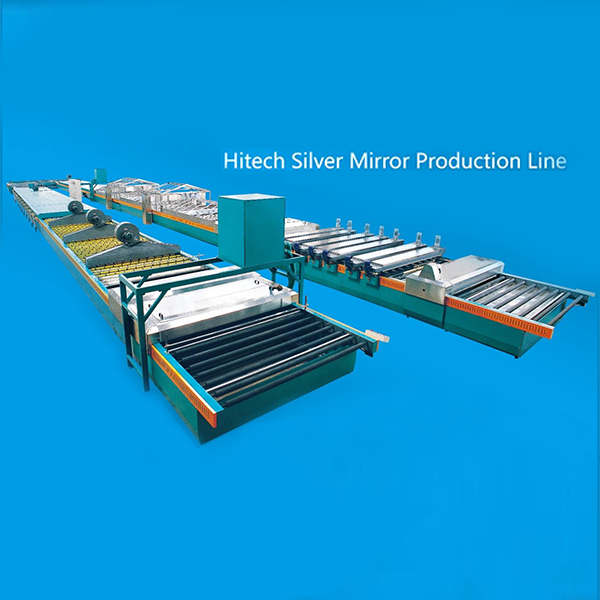
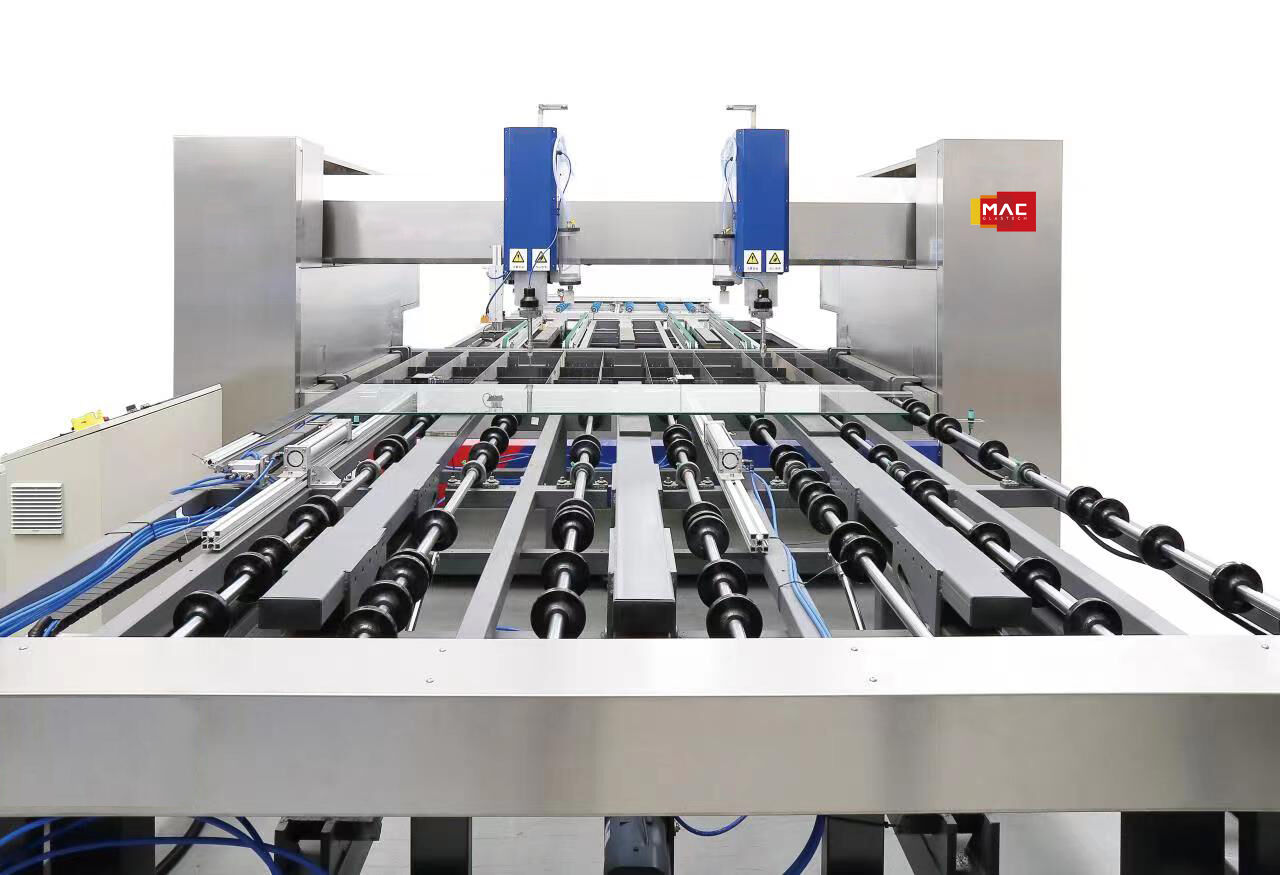
A glass laminating machine represents essential manufacturing equipment designed to bond multiple layers of glass together with interlayer materials, creating laminated safety glass products. This sophisticated machinery serves as the cornerstone of modern glass processing facilities, enabling manufacturers to produce high-quality laminated glass for architectural, automotive, and specialty applications. The primary function of a glass laminating machine involves applying precise heat and pressure to glass sheets sandwiched with polyvinyl butyral film or other interlayer materials, ensuring complete adhesion and eliminating air bubbles or imperfections. The process transforms ordinary glass into enhanced safety products that remain intact even when shattered, with fragments adhering to the interlayer rather than scattering dangerously. Technological features of contemporary glass laminating machine systems include programmable temperature controls, automated pressure distribution mechanisms, and digital monitoring systems that track every stage of the lamination cycle. Advanced models incorporate vacuum systems to remove air pockets before bonding, ensuring crystal-clear results without optical distortions. The equipment typically consists of heating chambers, compression rollers, cooling zones, and conveyor systems that move glass assemblies through various processing stages efficiently. Modern glass laminating machine designs emphasize energy efficiency, with insulated heating chambers and heat recovery systems reducing operational costs. Applications span residential construction where laminated glass enhances security and sound insulation, commercial buildings requiring hurricane-resistant glazing, automotive manufacturing for windshields and sunroofs, and specialized industries producing bulletproof glass or decorative architectural elements. The versatility of glass laminating machine technology allows processors to work with various glass thicknesses, sizes, and interlayer materials, accommodating custom projects alongside standard production runs. Production capacity varies from compact machines suitable for small workshops processing several panels daily to industrial-scale systems handling hundreds of square meters hourly, meeting diverse market demands across the global glass processing industry.

Popular Products

Investing in a glass laminating machine delivers substantial benefits that directly impact your bottom line and operational capabilities. First and foremost, this equipment enables you to transform standard glass into premium safety products, opening lucrative market opportunities in construction, automotive, and security sectors where laminated glass commands higher prices. The automated processing capability significantly reduces labor requirements compared to manual methods, allowing your team to focus on quality control and customer service rather than repetitive production tasks. Production consistency represents another compelling advantage, as the glass laminating machine maintains uniform temperature, pressure, and timing across every cycle, eliminating the variations inherent in manual processing that can lead to rejected batches and wasted materials. This consistency translates directly into reduced material costs, fewer remakes, and higher customer satisfaction rates. The speed advantage cannot be overstated; modern glass laminating machine systems complete bonding cycles in fractions of the time required by traditional methods, dramatically increasing your daily output capacity without proportional increases in overhead expenses. Energy efficiency features built into contemporary machines reduce utility consumption, with precise temperature controls preventing wasteful overheating and insulated chambers retaining heat between cycles. The ability to process multiple glass thicknesses and sizes on a single glass laminating machine provides operational flexibility, allowing you to accept diverse projects without maintaining separate equipment for each specification. Quality improvements achieved through mechanical precision result in clearer optical properties, stronger bonds, and longer product lifespans, enhancing your reputation and reducing warranty claims. Safety benefits extend beyond the final product to your workplace environment, as automated handling systems minimize manual glass manipulation, reducing injury risks for employees. The glass laminating machine enables you to meet stringent building codes and safety standards required in modern construction, positioning your business to compete for high-value contracts that specify certified laminated glass products. Maintenance requirements remain manageable with straightforward cleaning procedures and accessible components designed for routine service without specialized technicians. Return on investment typically materializes within reasonable timeframes as increased production capacity, reduced labor costs, and premium product pricing offset initial equipment expenditure. Competitive advantages accumulate as your glass laminating machine capability allows faster turnaround times than competitors relying on outsourced lamination services, capturing time-sensitive projects and building client loyalty through reliable delivery schedules. Environmental benefits include reduced waste through improved first-pass success rates and the ability to incorporate recycled interlayer materials, appealing to sustainability-conscious customers and meeting green building requirements. The technological sophistication of modern glass laminating machine systems future-proofs your investment, with upgradeable controls and expandable capacity accommodating business growth without complete equipment replacement.

Practical Tips

What Are the Benefits of Using an Automated Glass Sorting System?

24

Sep

What Are the Benefits of Using an Automated Glass Sorting System?

Revolutionizing Glass Recycling Through Advanced Automation The glass recycling industry is undergoing a remarkable transformation with the integration of automated glass sorting systems. These sophisticated technologies are reshaping how recycling f...
View More
How Does a Glass Sorting System Integrate with Other Glass Lines?

24

Sep

How Does a Glass Sorting System Integrate with Other Glass Lines?

Seamless Integration of Modern Glass Sorting Technologies The integration of a glass sorting system into existing production lines represents a significant advancement in glass manufacturing and recycling operations. These sophisticated systems utili...
View More
How Can Double Edgers Improve Efficiency and Reduce Waste?

24

Nov

How Can Double Edgers Improve Efficiency and Reduce Waste?

In today's competitive manufacturing landscape, companies are constantly seeking ways to enhance operational efficiency while minimizing material waste. Double edgers have emerged as a pivotal solution for businesses processing sheet materials, offer...
View More
How Can Grinding Machines Enhance Surface Finish and Dimensional Accuracy?

19

Dec

How Can Grinding Machines Enhance Surface Finish and Dimensional Accuracy?

Manufacturing precision has reached unprecedented levels in modern industrial applications, where surface finish quality and dimensional accuracy determine product performance and market competitiveness. Advanced grinding machines represent the corne...
View More

Get a Free Quote

Our representative will contact you soon.
Email
Name
Company Name
Message
0/1000

glass laminating machine

Advanced Temperature Control Technology Ensures Perfect Bonding Results

Advanced Temperature Control Technology Ensures Perfect Bonding Results

The precision temperature management system integrated into modern glass laminating machine equipment represents a fundamental breakthrough that separates professional-grade results from amateur attempts at glass bonding. This sophisticated thermal control mechanism operates through multiple heating zones independently monitored and adjusted, ensuring every square centimeter of glass receives exactly the heat energy required for optimal interlayer activation without overheating risks that could damage glass or create optical distortions. The technology employs industrial-grade heating elements strategically positioned throughout the processing chamber, working in concert with temperature sensors that provide real-time feedback to digital controllers. These controllers make instantaneous adjustments measured in fractions of degrees, maintaining the precise temperature ranges required for different interlayer materials, whether processing standard polyvinyl butyral films requiring specific activation temperatures or specialty interlayers with unique thermal characteristics. The importance of this temperature precision cannot be overstated; even minor variations can result in incomplete bonding that compromises safety properties, or excessive heat that causes discoloration and structural weaknesses. Professional glass laminating machine systems eliminate these risks through programmable temperature profiles that can be customized for specific projects, saved for repeat orders, and recalled instantly without manual recalibration. The thermal uniformity achieved through engineered heat distribution prevents hot spots that plague simpler equipment, ensuring the center and edges of large glass panels receive identical treatment for consistent results across entire production runs. Energy efficiency benefits accompany this precision, as targeted heating delivers thermal energy only where and when needed, avoiding the wasteful continuous heating required by less sophisticated systems. The rapid response capability of advanced temperature controls accelerates production cycles, with heating chambers reaching optimal temperatures quickly at cycle start and cooling efficiently between batches without lengthy waiting periods. For businesses processing diverse product specifications, this glass laminating machine technology provides invaluable flexibility, accommodating thin decorative glass requiring gentler heating alongside thick security glass demanding higher temperatures and longer dwell times. The value proposition extends beyond immediate production benefits to long-term reliability, as quality temperature control systems protect your equipment investment by preventing thermal stress on mechanical components and extending service life through controlled operating conditions. Customer satisfaction improves measurably when every delivered product exhibits the crystal clarity and structural integrity that only perfect temperature-controlled lamination can achieve, building your reputation for excellence and generating referral business that fuels growth.
Automated Pressure Distribution System Eliminates Defects and Improves Efficiency

Automated Pressure Distribution System Eliminates Defects and Improves Efficiency

The automated pressure application technology built into professional glass laminating machine systems revolutionizes the bonding process by ensuring uniform compression across entire glass surfaces, eliminating the air pockets, edge lifting, and inconsistent adhesion that compromise product quality and safety performance. This engineering achievement employs precision-manufactured compression rollers, hydraulic press systems, or vacuum chambers that apply mathematically calculated pressure distributed evenly regardless of glass dimensions or thickness variations. The significance becomes apparent when considering that laminated glass strength depends entirely on complete interlayer adhesion; even microscopic air bubbles can propagate into larger defects over time, eventually causing delamination failures that necessitate costly replacements and damage your professional reputation. Advanced glass laminating machine designs prevent these issues through pressure sensors monitoring compression force in real-time, automatically compensating for material variations or positioning irregularities that would create uneven loading in manual systems. The automation aspect delivers consistency impossible to achieve through operator-dependent methods, with each production cycle replicating precise pressure curves programmed for optimal results based on glass specifications and interlayer materials. Progressive pressure application represents a key technological refinement, where compression increases gradually rather than suddenly, allowing trapped air to escape through edges before final sealing occurs, a technique that dramatically reduces bubble formation even in challenging configurations involving textured glass or multiple interlayers. The efficiency gains from automated pressure control extend throughout your operation, as the glass laminating machine handles the critical compression phase without continuous operator intervention, freeing skilled personnel for setup, inspection, and other value-adding activities while the equipment executes its programmed cycles with mechanical precision. Production speed increases become achievable because automated systems optimize pressure duration, applying exactly the compression time required for complete bonding without the excessive dwell periods that conservative manual operators might employ as safety margins against inadequate pressing. The glass laminating machine technology also accommodates varying product sizes seamlessly, with adjustable pressure zones that configure automatically based on input dimensions, eliminating manual recalibration between jobs and reducing changeover times that limit productivity in traditional processing environments. Quality control benefits materialize through reduced inspection failures and customer returns, as the consistent pressure delivery ensures every panel meets specifications without the random defects that occur when human variables influence critical process parameters. Investment protection accompanies these capabilities, as even pressure distribution prevents mechanical stress concentrations that could damage expensive glass materials or overload equipment components, extending both material yield and machinery service life while reducing maintenance requirements.
Multi-Layer Processing Capability Expands Market Opportunities and Revenue Potential

Multi-Layer Processing Capability Expands Market Opportunities and Revenue Potential

The versatility engineered into modern glass laminating machine equipment to process multiple glass layers and diverse interlayer configurations opens remarkable business opportunities that single-layer systems cannot address, positioning your operation to serve premium market segments where specialized laminated products command substantially higher profit margins than standard two-layer constructions. This capability stems from enhanced chamber designs with sufficient internal dimensions to accommodate thicker assemblies, reinforced heating systems providing adequate thermal energy to penetrate multiple layers, and strengthened compression mechanisms delivering the increased pressure required to bond complex configurations. The practical applications span architectural projects specifying multi-layer assemblies for extreme security requirements, where three or more glass layers with multiple interlayers create barriers resistant to forced entry, ballistic threats, or blast forces that single laminations cannot withstand. The glass laminating machine technology enables you to produce these specialized products in-house rather than declining projects or outsourcing to competitors, capturing entire project values and building expertise in profitable niche markets. Acoustic lamination represents another lucrative application, where multiple layers with sound-dampening interlayers provide superior noise reduction for urban buildings near highways, airports, or entertainment districts, addressing a growing market as urbanization increases environmental noise concerns. The equipment flexibility extends to decorative applications incorporating colored interlayers, embedded materials like fabric or wire mesh, or printed designs sandwiched between glass layers, creating architectural features and artistic installations that designers specify for distinctive building aesthetics. Processing capability for varying glass thicknesses within single assemblies adds further versatility, allowing asymmetric constructions that optimize performance characteristics by positioning thicker glass externally for impact resistance while using thinner internal layers for weight reduction. The glass laminating machine handles these complex configurations through programmable processing parameters that adjust temperature profiles and pressure curves based on total assembly thickness and material composition, maintaining the precision required for quality results across diverse specifications. Revenue potential multiplies as your capability portfolio expands, enabling you to pursue contracts in security, transportation, marine, and specialty markets that standard glass processors cannot serve, differentiating your business through technical capabilities that command premium pricing. The production efficiency of processing multiple layers in single cycles rather than separate lamination stages reduces manufacturing costs per unit, improving profit margins even as you charge competitive prices for specialized products. Customer relationships deepen when you become their single-source provider for both standard and specialized laminated glass requirements, simplifying their procurement processes while securing your position as their preferred supplier across product categories. The glass laminating machine investment thereby transforms from simple processing equipment into a strategic business asset that enables market expansion, revenue diversification, and competitive differentiation in an increasingly demanding glass industry landscape.