Professional Glass Edge Polisher Machines - Precision Glass Edging Solutions

All Categories

Get a Free Quote

Our representative will contact you soon.
Email
Name
Company Name
Message
0/1000

glass edge polisher

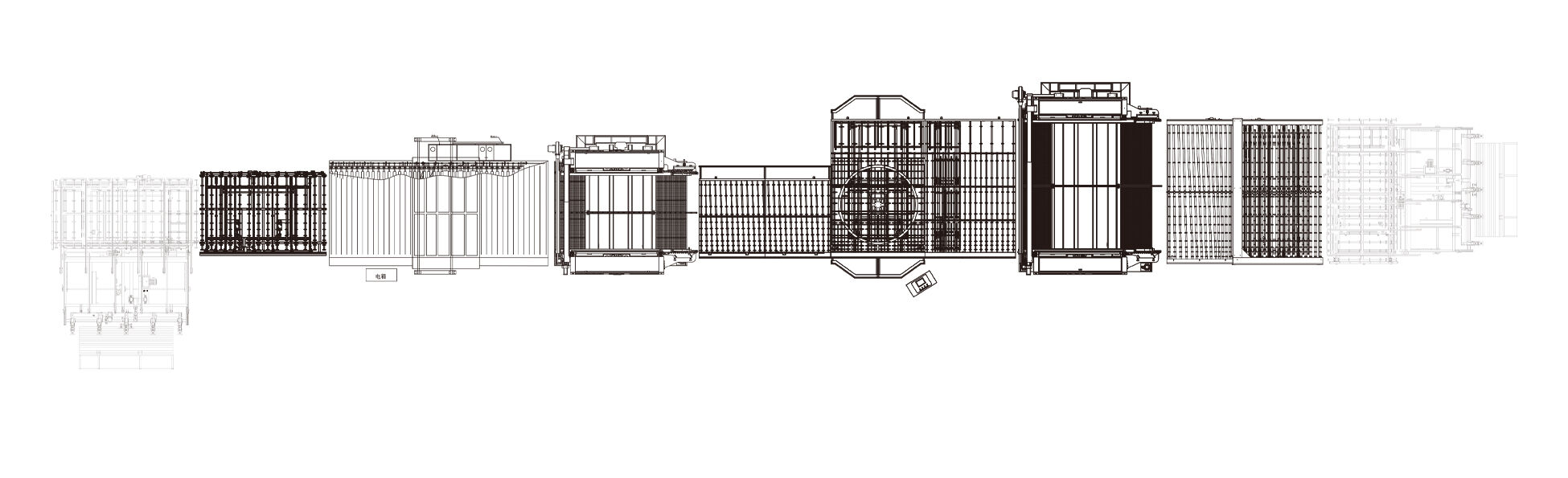
A glass edge polisher is an essential piece of equipment designed to refine and smooth the edges of glass panels, sheets, and components after cutting processes. This specialized machinery transforms rough, sharp glass edges into safe, polished surfaces that meet both aesthetic and functional requirements. The primary function of a glass edge polisher involves removing irregularities, beveling edges, and creating various edge profiles ranging from simple flat polishes to complex decorative shapes. Modern glass edge polishers utilize a series of diamond-coated grinding wheels that progressively refine the glass surface through multiple stages, starting with coarse abrasives and finishing with fine polishing compounds. The technological features of contemporary glass edge polishers include digital control systems that allow operators to program specific edge profiles, variable speed controls for different glass thicknesses, and automated water cooling systems that prevent thermal stress and cracking during the polishing process. Many advanced models incorporate touch-screen interfaces, memory functions for storing frequently used settings, and servo motors that ensure consistent pressure application across the entire edge length. The machine typically consists of multiple grinding and polishing heads arranged in sequence, each serving a specific purpose in the edge refinement process. Applications for glass edge polishers span numerous industries including architectural glazing, automotive glass manufacturing, furniture production, mirror fabrication, and decorative glass artistry. In architectural applications, polished edges are crucial for frameless glass installations, shower enclosures, and glass railings where exposed edges must be both visually appealing and safe to touch. Furniture manufacturers rely on glass edge polishers to create elegant tabletops, shelving units, and display cases with professionally finished edges. The automotive industry uses these machines to ensure windshields and windows meet strict safety standards. Additionally, artists and designers employ glass edge polishers to create custom decorative pieces, awards, and specialty glass products that require precise edge treatments and unique profiles.

New Product Recommendations

Investing in a glass edge polisher delivers substantial practical benefits that directly impact your production efficiency and product quality. First and foremost, these machines dramatically reduce the time required to finish glass edges compared to manual polishing methods, allowing your business to complete more orders and serve additional customers without expanding your workforce. What once took hours of laborious hand polishing can now be accomplished in minutes with consistent, repeatable results. The precision offered by a glass edge polisher eliminates human error and variability, ensuring every piece meets exact specifications regardless of which operator runs the machine. This consistency translates directly into reduced waste, as fewer pieces are rejected due to quality issues, saving you money on materials and improving your profit margins. Safety improvements represent another significant advantage, as automated polishing removes workers from direct contact with sharp glass edges and reduces the risk of cuts and injuries in your facility. The smooth, professionally polished edges produced by these machines also make the final glass products safer for end users, reducing liability concerns and building customer trust in your brand. Operational flexibility stands out as a key benefit, with most glass edge polishers capable of handling various glass thicknesses, sizes, and edge profiles without requiring extensive retooling or setup changes. This versatility allows you to accept diverse projects and respond quickly to custom orders that might otherwise require outsourcing or turning away business. The professional finish achieved by a glass edge polisher elevates the perceived value of your products, enabling you to command premium pricing and compete effectively in higher-end markets. Energy efficiency in modern models keeps operational costs manageable, while durable construction ensures years of reliable service with minimal maintenance requirements. The automated water recycling systems found in quality glass edge polishers minimize water consumption and environmental impact, aligning your operations with sustainability goals that increasingly matter to commercial and residential customers. Training new employees becomes simpler with intuitive controls and programmable settings that store common configurations, reducing the skill barrier and allowing you to maintain productivity even with staff changes. The compact footprint of many glass edge polisher models means you can add this capability without requiring expensive facility expansions, making it an accessible investment for growing businesses. Finally, the enhanced production capacity and quality improvements generated by a glass edge polisher create opportunities for business growth, allowing you to pursue larger contracts, expand into new markets, and establish your reputation as a provider of premium glass products that meet the highest standards.

Practical Tips

What Types of Coatings Are Applied in a Glass Coating Line?

24

Sep

What Types of Coatings Are Applied in a Glass Coating Line?

Understanding Modern Glass Coating Technologies Glass coating technology has revolutionized the way we enhance and protect glass surfaces across various industries. From architectural applications to automotive windshields, the glass coating line pro...
View More
How Do Glass Drilling Machines Handle Different Glass Thicknesses Safely?

28

Oct

How Do Glass Drilling Machines Handle Different Glass Thicknesses Safely?

Understanding Modern Glass Drilling Technology and Safety Mechanisms The world of glass fabrication has evolved significantly with the introduction of advanced glass drilling machines that can handle various glass thicknesses with remarkable precisio...
View More
How to Select the Right Hub Glass Furnace for Your Facility?

24

Nov

How to Select the Right Hub Glass Furnace for Your Facility?

Selecting the appropriate hub glass furnace for your manufacturing facility represents one of the most critical decisions that will impact your production efficiency, product quality, and long-term operational costs. A hub glass furnace serves as the...
View More
What Factors Influence Compatibility With Different Glass Sheet Sizes?

19

Dec

What Factors Influence Compatibility With Different Glass Sheet Sizes?

Glass manufacturing and processing industries face critical decisions when selecting equipment that can accommodate varying sheet dimensions. Modern fabrication facilities require versatile solutions that maintain precision across different material ...
View More

Get a Free Quote

Our representative will contact you soon.
Email
Name
Company Name
Message
0/1000

glass edge polisher

Advanced Multi-Stage Polishing System for Superior Edge Quality

Advanced Multi-Stage Polishing System for Superior Edge Quality

The advanced multi-stage polishing system represents the cornerstone technology that sets professional glass edge polishers apart from basic grinding equipment. This sophisticated approach employs a carefully engineered sequence of grinding and polishing stations, each configured with progressively finer abrasive materials to achieve flawless edge finishes. The process typically begins with coarse diamond wheels that remove significant material and establish the basic edge profile, eliminating chips, cracks, and major irregularities left by cutting operations. Subsequent stations utilize medium-grit abrasives that refine the surface texture and remove the scratches created by earlier stages, gradually smoothing the glass to prepare it for final polishing. The final stations employ ultra-fine polishing compounds and felt or cork wheels that create the crystal-clear, smooth finish that defines quality glass products. What makes this multi-stage system particularly valuable is its ability to balance efficiency with quality, removing material quickly in early stages while ensuring the delicate final polishing steps receive adequate attention without rushing. Each polishing head in the sequence operates at precisely calibrated speeds and pressures, optimized for the specific task it performs, ensuring maximum effectiveness at every stage. The spacing between polishing stations and the dwell time at each position are carefully calculated to prevent over-polishing or under-polishing, both of which can compromise edge quality. Modern glass edge polishers incorporate sensors and feedback mechanisms that monitor the polishing process in real-time, automatically adjusting parameters to compensate for variations in glass hardness, thickness, or initial edge condition. This intelligent adaptation ensures consistent results across different glass types and batches without requiring constant operator intervention. The water delivery system integrated into the multi-stage polishing process serves multiple critical functions, including cooling the glass to prevent thermal stress, lubricating the abrasive contact points to reduce friction, and flushing away glass particles that could scratch the surface if allowed to accumulate. Proper water management throughout all polishing stages is essential for achieving optimal results, and quality glass edge polishers feature precisely engineered nozzles and flow rates for each station. The cumulative effect of this multi-stage approach is edge quality that meets or exceeds industry standards for clarity, smoothness, and dimensional accuracy, enabling manufacturers to produce glass products suitable for the most demanding applications where edge appearance and safety are paramount concerns.
Programmable Digital Controls with Memory Functions for Operational Efficiency

Programmable Digital Controls with Memory Functions for Operational Efficiency

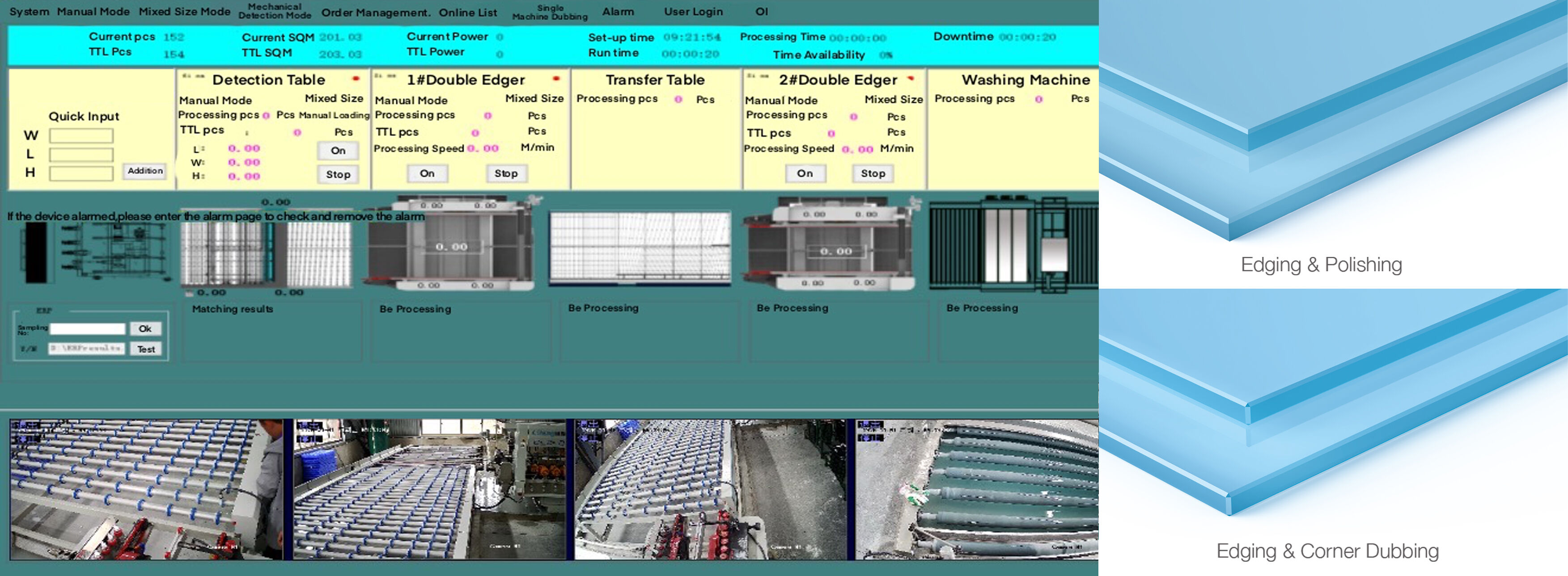
The programmable digital control system integrated into modern glass edge polishers revolutionizes how operators interact with the equipment and manage production workflows. This technology replaces older manual adjustment methods with intuitive touch-screen interfaces that allow users to input precise specifications, select from pre-configured edge profiles, and monitor machine performance in real-time. The memory function capability stands as one of the most valuable features, enabling operators to store dozens or even hundreds of different polishing programs that capture every parameter needed for specific jobs. When a repeat order arrives, the operator simply recalls the saved program, and the glass edge polisher automatically configures all settings including grinding wheel speeds, feed rates, pressure applications, and sequential timing for each polishing stage. This automation eliminates the trial-and-error process that traditionally consumed time and wasted materials when setting up machines for different edge profiles or glass specifications. The precision afforded by digital controls surpasses what even the most experienced operators can achieve through manual adjustments, as electronic servo motors and stepper drives execute programmed parameters with tolerances measured in fractions of millimeters. Consistency across production runs improves dramatically because the machine replicates saved programs identically every time, removing human variability from the equation. Training new employees becomes significantly faster and simpler when they can select proven programs rather than learning complex manual adjustment procedures, reducing the skill barrier and allowing businesses to maintain productivity during staff transitions. The digital interface typically displays real-time feedback including current operating parameters, elapsed processing time, and diagnostic information that helps operators identify and address issues before they impact production. Advanced glass edge polisher models incorporate adaptive control algorithms that automatically compensate for tool wear, ensuring consistent edge quality throughout the life of grinding and polishing wheels rather than producing gradual quality degradation. Some systems feature remote connectivity options that allow supervisors to monitor multiple machines from a central location, access performance data for analysis, and even adjust settings without physically approaching the equipment. The data logging capabilities built into digital control systems create valuable records of machine usage, maintenance needs, and production statistics that inform business decisions and optimize operational efficiency. Error prevention features such as parameter range limits and incompatible setting warnings protect both the equipment and workpieces from damage that could result from incorrect programming. The ability to create custom edge profiles by defining specific wheel positions, speeds, and sequences empowers manufacturers to develop unique products that differentiate them in competitive markets. Firmware updates delivered through USB connections or network interfaces allow glass edge polisher owners to benefit from ongoing software improvements and new features without replacing hardware, extending the useful life of their investment and keeping pace with evolving industry requirements.
Robust Construction with Low Maintenance Requirements for Long-Term Reliability

Robust Construction with Low Maintenance Requirements for Long-Term Reliability

The robust construction methodology employed in quality glass edge polishers ensures these machines deliver reliable performance year after year with minimal maintenance demands, providing exceptional value over their operational lifespan. Manufacturers of professional-grade equipment utilize heavy-duty steel frames and precision-machined components that withstand the constant vibration, moisture exposure, and mechanical stresses inherent in glass polishing operations. The structural integrity provided by this solid construction prevents the alignment issues and premature wear that plague lighter-duty machines, maintaining polishing accuracy and quality output throughout years of intensive use. Critical components such as spindle assemblies, bearing housings, and motor mounts receive special engineering attention to ensure they can endure millions of operational cycles without developing play or misalignment that would compromise edge quality. Sealed bearing systems protect internal components from the water and glass particles present in the polishing environment, dramatically extending component life compared to open designs that allow contamination. Stainless steel and corrosion-resistant materials feature prominently in areas exposed to water and polishing compounds, preventing rust and degradation that would otherwise necessitate frequent part replacement. The grinding and polishing heads themselves are designed for quick wheel changes, allowing operators to replace worn abrasives in minutes rather than hours, minimizing downtime and keeping production flowing smoothly. Tool-free adjustment mechanisms simplify routine tasks such as positioning changes and pressure calibration, reducing the technical expertise required for basic maintenance and empowering operators to handle common adjustments without waiting for specialized technicians. Centralized lubrication systems in advanced models automatically deliver proper lubrication to all moving parts on programmed intervals, eliminating the risk of missed manual lubrication tasks that could lead to premature wear. The water recirculation and filtration systems incorporated into well-designed glass edge polishers reduce consumption and operating costs while preventing pump damage from glass particle accumulation, with easily accessible filters that operators can clean or replace during routine maintenance procedures. Electrical systems built to industrial standards with proper shielding and weatherproofing withstand the harsh manufacturing environment, avoiding the electrical faults and control system failures that sideline inferior machines. Comprehensive diagnostic systems continuously monitor critical parameters such as motor currents, temperatures, and vibration levels, alerting operators to potential issues before they cause failures, enabling proactive maintenance that prevents costly unplanned downtime. The availability of replacement parts and manufacturer support for established glass edge polisher brands ensures that when components eventually require replacement after years of service, obtaining and installing them proceeds quickly without extended production interruptions. Modular design approaches allow individual subsystems to be serviced or upgraded independently, extending the economic life of the equipment and protecting the initial investment even as technology advances. The combination of durable construction, thoughtful engineering, and maintainability features results in total cost of ownership that remains remarkably low compared to the revenue-generating capacity these machines provide, making a glass edge polisher not just a tool but a long-term business asset that contributes to profitability year after year.